Tuesday, November 24, 2026
spot_img
Home Blog Page 108

PS ಕೇವಲ 95 ರೂಪಾಯಿ ಹೂಡಿಕೆ ಮಾಡಿ ಸಾಕು, 14 ಲಕ್ಷ ಸಿಗುತ್ತೆ.!

0


PS Invest Just ₹95 a Day and Build a Future Worth ₹14 Lakhs with Post Office Scheme

PS  The Indian Postal Department, once seen only as a messenger of letters, has now transformed into one of the most trusted financial service providers in the country. Today, the Post Office competes with nationalized banks by offering a wide range of savings and investment plans that are secure, reliable, and designed for common citizens across urban and rural areas.

Among its various financial products, one unique scheme stands out – the Gram Sumangal Dak Jeevan Bima Scheme. This policy is not just an insurance plan; it doubles up as a disciplined savings method, helping families create a substantial financial backup for the future. With a small daily contribution of just ₹95, an investor can accumulate nearly ₹14 lakhs over time. Let’s dive deep into how this plan works, its benefits, eligibility criteria, and why it can be a smart move for families.


Why Choose Post Office Schemes?

Post Office financial services are especially popular because:

  • They are government-backed, ensuring security and credibility.
  • Every small town and village in India has a post office, making them easily accessible.
  • Investment options are available for different income groups, ensuring inclusivity.
  • Schemes are designed with long-term savings discipline in mind, offering stability and guaranteed returns.

For families who cannot afford large lump-sum investments, post office insurance schemes like Gram Sumangal provide an affordable, step-by-step approach to wealth creation.


What is Gram Sumangal Dak Jeevan Bima Scheme?

The Gram Sumangal Dak Jeevan Bima Scheme is a money-back cum life insurance policy offered by the Postal Life Insurance (PLI) division. It allows individuals to invest small amounts regularly and reap long-term benefits.

Imagine saving just ₹95 every single day – an amount equal to the cost of a cup of tea in a city café – and turning it into a massive ₹14 lakhs corpus. This is possible because the scheme not only offers insurance protection but also structured payouts and a maturity benefit at the end of the term.


Key Features of the Scheme

  1. Affordable Daily Investment
    • Just ₹95 per day (approximately ₹2,850 per month).
    • Easy for middle-class and rural families to sustain without financial burden.
  2. Policy Tenure Options
    • 15 years or 20 years term.
    • Choose tenure depending on your financial goal – children’s education, marriage, or retirement support.
  3. Age Criteria
    • Minimum entry age: 19 years.
    • Maximum entry age:
      • 45 years (for 15-year plan).
      • 40 years (for 20-year plan).
  4. Assured Returns
    • On maturity, investors can receive up to ₹14 lakhs (depending on chosen plan and premium).
  5. Loan Facility
    • After completing 3 years, policyholders can avail loan against the policy from Post Office or even banks.
  6. Nominee Facility
    • Nomination available to ensure the family receives benefits in case of the insured person’s untimely death.
  7. Life Coverage + Savings
    • Acts as both a life insurance cover and a savings plan, offering financial security.

How Does the Plan Work? (Illustration Example)

Let’s assume Mr. Ramesh, aged 25, decides to invest in the scheme.

  • Daily Contribution: ₹95
  • Term: 15 years
  • Total Premium Paid: Around ₹5.2 lakhs over 15 years
  • Maturity Returns: Around ₹14 lakhs including bonuses and survival benefits

This amount can be a huge support when his children are ready for higher education or marriage. Without straining his present lifestyle, Ramesh ensures a secured financial cushion for the future.


Benefits of Gram Sumangal Scheme

  1. Secured Future for Children
    Parents with young children can invest early. By the time kids are ready for college or marriage, the scheme provides a lump sum.
  2. Encourages Habit of Saving
    Small daily investment builds a strong saving habit without financial stress.
  3. Government Backing
    As this is a Post Office initiative, returns and payouts are guaranteed.
  4. Risk-Free Investment
    Unlike market-linked schemes, this plan offers stable returns, unaffected by stock market fluctuations.
  5. Liquidity Through Loan
    In case of emergencies, investors can borrow against the policy after 3 years.
  6. Double Advantage
    Life insurance + savings = financial protection along with wealth creation.

Who Should Invest in This Scheme?

  • Young professionals who want to start small and build wealth gradually.
  • Parents seeking financial security for children’s future education and marriage.
  • Middle-class families who prefer safe investments over risky market products.
  • Rural citizens with limited access to banks but easy access to post offices.

Steps to Apply for the Scheme

  1. Visit your nearest Post Office branch.
  2. Collect and fill the Gram Sumangal Dak Jeevan Bima application form.
  3. Submit required documents such as:
    • Age proof (Aadhaar, Birth Certificate, PAN Card).
    • Identity & Address proof.
    • Passport-size photographs.
  4. Choose your policy tenure (15 years or 20 years).
  5. Decide on premium payment mode – daily, monthly, or auto-debit from a savings account.
  6. Pay the first installment and receive policy confirmation.

Why is This Scheme Relevant Today?

In today’s times, where financial uncertainties are rising, building a guaranteed fund for the future is crucial. High inflation, rising education expenses, and lifestyle changes demand long-term planning.

The Gram Sumangal Scheme is designed for the common man who may not be able to invest in high-risk options like stocks or mutual funds. It gives confidence that the money saved today will multiply steadily and be available at the right time for important family needs.


Application

Final Thoughts

The transformation of the Indian Postal Department into a reliable financial backbone is a success story in itself. Through schemes like Gram Sumangal Dak Jeevan Bima, it empowers millions of families to dream big and achieve financial security.

If you can spare just ₹95 daily, instead of spending it casually, you could build a fund worth ₹14 lakhs – enough to support education, marriage, or retirement needs. It’s not just an investment; it’s a step towards a secure future.

So, if you want to secure your family’s tomorrow without burdening today’s lifestyle, the Post Office Gram Sumangal Scheme is worth considering. Visit your nearby post office and start your journey today.



BSF ಹುದ್ದೆಗಳಿಗೆ ಅರ್ಜಿ ಆಹ್ವಾನ.!

0


BSF Head Constable Recruitment 2025 – 1121 Vacancies for RO & RM Posts | Apply Online

The Border Security Force (BSF), one of the most prestigious paramilitary forces in India, has officially announced a massive recruitment drive for the year 2025. Through this notification, BSF is inviting applications from eligible candidates for the post of Head Constable (Radio Operator – RO) and Head Constable (Radio Mechanic – RM). With 1121 vacancies up for grabs, this is a golden opportunity for young aspirants who want to serve the nation and secure a government job with attractive pay and benefits.

This article provides a complete guide on vacancies, eligibility, selection procedure, physical standards, exam pattern, salary, and application process for BSF Head Constable Recruitment 2025.


📌 Vacancy Details

The total number of posts announced is 1121, distributed as follows:

  • Head Constable (Radio Operator – RO): 910 Posts
  • Head Constable (Radio Mechanic – RM): 211 Posts

Out of these, 280 posts are reserved for departmental candidates through departmental exams, while the remaining will be filled through direct recruitment.


📌 Eligibility Criteria

To apply for BSF Head Constable Recruitment 2025, candidates must satisfy the educational qualification and age limit criteria.

1. Educational Qualification

  • For Head Constable (RO):
    • Passed Class 12 (10+2) with Physics, Chemistry, and Mathematics as compulsory subjects with at least 50% marks, OR
    • Completed ITI in relevant trades like Radio/Television, Electronics, Computer Operator & Programming Assistant, Data Preparation & Computer Software, or General Electronics Engineering.
  • For Head Constable (RM):
    • Passed Class 12 (Science stream), OR
    • Completed a 2-year ITI in trades such as Hardware Technician, Networking Technician, Mechatronics, or Data Entry Operator.

2. Age Limit

  • Minimum: 18 years
  • Maximum: 25 years
  • Relaxation:
    • OBC: 3 years
    • SC/ST: 5 years

📌 Salary and Benefits

The selected candidates will be appointed under Pay Matrix Level-4 of the 7th Pay Commission.

  • Salary Range: ₹25,500 – ₹81,100 per month
  • Additional Benefits:
    • Dearness Allowance (DA)
    • House Rent Allowance (HRA)
    • Medical Facilities
    • Pension & Retirement Benefits
    • Risk Allowance and other perks exclusive to armed forces

This makes BSF Head Constable not only a prestigious but also a financially stable career option.


📌 Physical Standards

Since BSF is a paramilitary force, physical fitness plays a crucial role in the recruitment process. Candidates must meet the following criteria:

  • Height Requirement:
    • Male: 168 cm
    • Female: 157 cm
  • Weight: Proportionate to height and age
  • Physical Efficiency Test (PET):
    • For Males:
      • 1.6 km run in 6.5 minutes
      • 11 feet long jump (3 attempts)
      • 3.5 feet high jump (3 attempts)
    • For Females:
      • 800 m run in 4 minutes
      • 9 feet long jump (3 attempts)
      • 3 feet high jump (3 attempts)

📌 Selection Process

The recruitment will be conducted in multiple stages to ensure the best candidates are selected. The stages include:

  1. Physical Standard Test (PST) & Physical Efficiency Test (PET)
    • Candidates will first undergo a height, weight, and chest measurement test, followed by PET.
  2. Written Examination (Computer-Based Test – CBT)
    • The test will be conducted in English and Hindi.
    • Exam Pattern:
      • Total Questions: 100
      • Maximum Marks: 200
      • Subjects Covered:
        • Physics, Chemistry, Mathematics (Class 12 level) – 80 questions
        • English & General Knowledge – 20 questions
      • Negative Marking: ¼ mark deducted for each wrong answer.
  3. Descriptive Test (for RO candidates only)
    • Candidates will be asked to read a passage/paragraph to test their comprehension skills (50 marks).
  4. Document Verification
    • Candidates must present original documents for verification.
  5. Medical Examination
    • Final stage to ensure medical fitness.

📌 Exam Syllabus Overview

  • Physics: Laws of Motion, Electricity, Magnetism, Waves, Optics, Modern Physics
  • Chemistry: Atomic Structure, Chemical Bonding, Electrochemistry, Organic & Inorganic Chemistry basics
  • Mathematics: Algebra, Trigonometry, Calculus, Probability, Statistics
  • English: Grammar, Vocabulary, Comprehension
  • General Knowledge: Current Affairs, Indian Constitution, History, Geography, General Science

📌 Application Fee

  • General / OBC / EWS: ₹100
  • SC / ST / Female Candidates: Exempted (No Fee)

The application fee can be paid online through debit/credit card, UPI, or net banking.


📌 Important Dates

  • Notification Release Date: 22 August 2025
  • Online Application Start Date: 24 August 2025
  • Last Date to Apply Online: 23 September 2025
  • Admit Card Release: Few days before exam
  • Exam Date: To be announced soon

📌 How to Apply

Candidates can apply through the official BSF recruitment website: bsf.gov.in

Steps to Apply:

  1. Visit the official website and go to the recruitment section.
  2. Select the “BSF Head Constable RO/RM Recruitment 2025” link.
  3. Register with basic details and create login credentials.
  4. Fill in the application form carefully.
  5. Upload required documents (photo, signature, certificates).
  6. Pay the application fee (if applicable).
  7. Submit the form and download a copy for future reference.

📌 Why Choose a Career as a BSF Head Constable?

  • Serve the Nation: A chance to work at the frontline of India’s security.
  • Job Security: Central government job with retirement benefits.
  • Growth Opportunities: Promotions to higher ranks with experience and departmental exams.
  • Financial Benefits: Competitive salary, allowances, and pension.
  • Respect & Recognition: Serving in BSF is a matter of pride and honor.

Application

Conclusion

The BSF Head Constable Recruitment 2025 offers a once-in-a-lifetime opportunity for young Indians to join the nation’s most prestigious paramilitary force. With over 1100 vacancies, the scope is wide for candidates with 12th pass or ITI qualifications. The recruitment process is rigorous, but with the right preparation, aspirants can achieve their dream of wearing the BSF uniform.

If you are physically fit, academically qualified, and passionate about serving the nation, this is your chance to secure a highly respected and rewarding government job.

👉 Apply before 23rd September 2025 at bsf.gov.in.


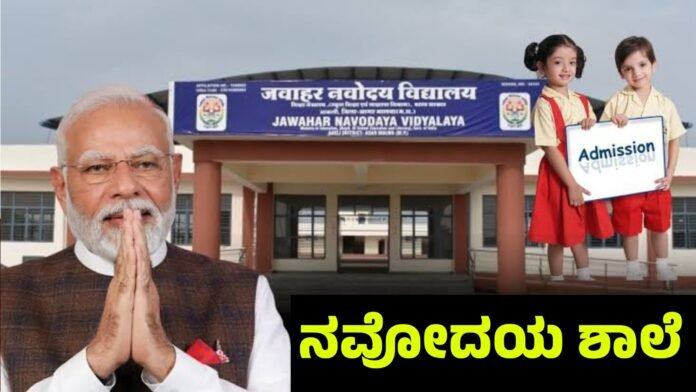
Navodaya ನವೋದಯ ಶಾಲೆಗೆ ಉಚಿತ ಪ್ರವೇಶ

0


Navodaya Vidyalaya Class 6 Admission 2026–27 – Last Date Extended, Apply Online Now

Jawahar Navodaya Vidyalayas (JNVs) are among the most reputed government-run schools in India, known for offering high-quality education at no cost to talented children, mainly from rural backgrounds. Every year, thousands of students and parents eagerly wait for the admission process, especially for entry into Class 6, which is the main gateway to these institutions.

For the academic session 2026–27, the admission process for Class 6 in Navodaya Schools has already begun. Initially, the last date to apply was scheduled for August 13, 2025, but considering the overwhelming response and requests from parents, the Navodaya Vidyalaya Samiti (NVS) has now officially extended the last date to August 27, 2025. This extension gives parents and students more time to complete the online application process.

In this article, we bring you the complete details about eligibility, documents required, the online application procedure, and other essential updates for Navodaya Class 6 Admission 2026–27.


Why Choose Navodaya Vidyalaya?

Before diving into the admission process, it is important to understand why JNVs are considered unique.

  • Quality Education Free of Cost – Students do not have to pay tuition fees; the government covers all academic and residential expenses.
  • Rural Student Focus – A majority of seats are reserved for children from rural backgrounds, ensuring equal opportunities.
  • Holistic Development – Apart from academics, students receive training in sports, cultural activities, and life skills.
  • Nationwide Network – With over 650 schools across India, Navodaya Vidyalayas ensure that meritorious children from every district get a chance to study.

Important Dates for Navodaya Class 6 Admission 2026–27

  • Notification Release – July 2025
  • Online Application Start Date – July 2025
  • Last Date to Apply (Extended) – August 27, 2025
  • Admit Card Availability – Expected in November/December 2025
  • Entrance Exam (JNVST 2026) – January 2026 (tentative)
  • Result Announcement – March/April 2026

Eligibility Criteria for Class 6 Admission

To ensure fair selection, NVS has laid down clear eligibility rules for Class 6 aspirants. Students must meet the following conditions:

  1. Educational Qualification – The applicant must be studying in Class 5 during the academic year 2025–26 in a recognized school (government, government-aided, or private recognized institution).
  2. Date of Birth Range – The student must be born between May 1, 2014 and April 30, 2016 (both dates inclusive).
  3. Rural Quota Requirement – At least 75% of the seats in a district are reserved for rural children. Students from urban areas can also apply but within the remaining 25% quota.
  4. Single Attempt Rule – A student can apply for the Navodaya entrance exam only once in Class 6.

Documents Required for Navodaya Online Application

When applying online, students and parents must keep scanned copies of the following documents:

  • Aadhaar Card of the student
  • Passport-size Photograph of the student
  • Signature of Student (scanned copy)
  • Signature of Parent/Guardian (scanned copy)
  • Residential Certificate issued by the competent authority
  • Study Certificate issued by the school where the student is studying in Class 5

How to Apply for Navodaya Class 6 Admission Online?

Parents and students can apply online either by visiting their nearest Grama One/CSC (Common Service Centre) or by directly filling out the application through the official website of Navodaya Vidyalaya Samiti.

Here is a step-by-step guide:

Step 1: Visit Official Website

  • Go to the Navodaya Vidyalaya Samiti admission portal.
  • On the homepage, click on the link for “Class 6 Admission 2026–27”.

Step 2: Fill in Student Details

  • Enter the student’s basic information such as name, gender, date of birth, school details, and residential status.

Step 3: Upload Documents

  • Upload scanned copies of all the mandatory documents (Aadhaar, photo, signatures, study certificate, residence proof).

Step 4: Final Submission

  • Review the application carefully.
  • Once confirmed, click “Submit”.
  • Save or print the acknowledgment slip for future reference.

Entrance Exam (JNVST 2026) – What to Expect?

Admission to Class 6 in Navodaya Vidyalayas is purely based on the Jawahar Navodaya Vidyalaya Selection Test (JNVST). The exam is designed to evaluate the student’s aptitude rather than rote learning.

  • Mode of Exam – Offline (OMR-based)
  • Duration – 2 hours
  • Total Marks – 100
  • Subjects Covered:
    • Mental Ability Test – 40 marks
    • Arithmetic Test – 30 marks
    • Language Test – 30 marks

Students must secure qualifying marks to be considered for selection. Results are declared online and also displayed at respective JNVs and district education offices.


Key Benefits of Studying in Navodaya Vidyalaya

  1. Residential Facilities – Free hostel, food, and accommodation for all admitted students.
  2. Exposure to Multiple Languages – Students learn three languages under the Three-Language Formula.
  3. CBSE Curriculum – All JNVs are affiliated with CBSE, ensuring a strong foundation for higher education.
  4. Scholarship & Higher Education Support – Many Navodaya students secure top ranks in competitive exams like JEE, NEET, UPSC due to quality guidance.
  5. Cultural Exchange Program – Students get opportunities to participate in exchange programs between states, enhancing national integration.

 Apply Now

Final Words

The extension of the last date to August 27, 2025 is a golden opportunity for parents and students who were unable to apply earlier. Navodaya Vidyalayas have consistently produced some of the brightest talents in the country, and securing admission here can truly shape a child’s future.

Parents are advised not to wait until the last minute. Ensure that all documents are ready and complete the application well before the deadline. With the right preparation, students can crack the JNVST exam and begin their journey toward a bright academic career.

For more details and online application, visit the official NVS website.


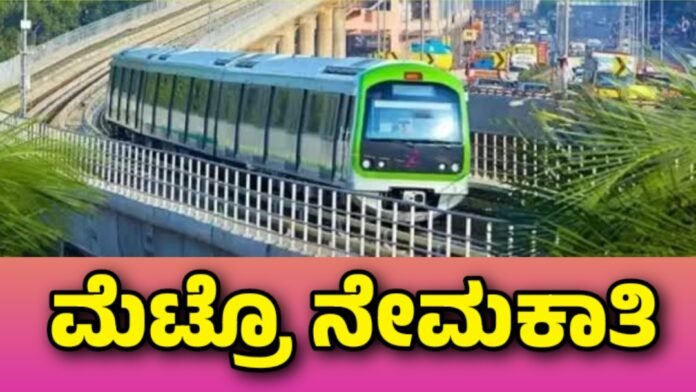
Metro ಮೆಟ್ರೋ ನೇಮಕಾತಿ

0


BMRCL Recruitment 2025: Apply Online for Axpert Developer Posts in Bengaluru Metro

The Bengaluru Metro Rail Corporation Limited (BMRCL), one of the most important urban transport projects in India, has officially released its recruitment notification for 2025. This year, the corporation is inviting talented professionals to apply for the position of Axpert Developer in its Information Technology division.

As Bengaluru continues to expand rapidly, the metro system has become a lifeline for daily commuters. Behind this massive infrastructure lies the constant effort of engineers, developers, and administrators working at BMRCL. The new recruitment drive for IT professionals is aimed at strengthening the technological backbone of the metro rail system.


Why This Recruitment is Important

The Bengaluru Metro is not just a transport project; it is a long-term vision to ease traffic congestion, reduce pollution, and connect all corners of the city. While the physical construction of tracks and stations gets most of the attention, the IT and digital infrastructure of BMRCL is equally critical. From ticketing and passenger management systems to safety operations and data handling, IT plays a central role.

Hiring Axpert Developers ensures that the organization has skilled professionals capable of managing advanced software systems, databases, and automation processes. This recruitment also highlights BMRCL’s commitment to providing secure, reliable, and technology-driven services to its millions of passengers.


Overview of BMRCL Recruitment 2025

  • Recruiting Organization: Bengaluru Metro Rail Corporation Limited (BMRCL)
  • Post Name: Axpert Developer
  • Number of Vacancies: 5 (subject to change as per requirements)
  • Job Location: Bengaluru, Karnataka
  • Mode of Application: Both Online and Offline (submission in both forms is mandatory)
  • Type of Employment: Contract basis for 3 years, extendable based on performance

Eligibility Criteria

Candidates interested in applying must meet the following requirements:

Educational Qualifications

  • A degree in B.E, B.Tech, BCA, or B.Sc. (Computer Science or related field).
  • Equivalent qualifications may also be considered.
  • Knowledge of SQL will be treated as an added advantage.

Applicants must attach all supporting documents with their applications. Incomplete submissions without valid certificates will be rejected.

Age Limit

  • The upper age limit is 36 years.
  • Age relaxation will be applicable for candidates from reserved categories, as per Government of India rules.

Salary and Benefits

The position of Axpert Developer comes with a consolidated monthly salary of ₹62,500. In addition to salary, selected candidates will receive:

  • Travel Allowance
  • Group Medical Coverage (GMC)
  • Group Personal Accident Insurance (GPA)
  • National Pension Scheme (NPS)
  • Other organizational benefits as per company policy

This package makes the opportunity highly attractive for IT professionals seeking stable and rewarding employment.


Selection Process

BMRCL follows a direct recruitment through interview process:

  1. Applications will be screened and shortlisted.
  2. Shortlisted candidates will receive an email or SMS notification with the date and venue of the interview.
  3. Candidates must attend the interview at their own expense.
  4. Preference will be given to applicants with proficiency in Kannada language.

Application Process

Candidates must apply in two steps – online and offline.

  1. Online Application
    • Visit the official BMRCL website: www.bmrc.co.in/career
    • Fill in the required details carefully.
    • Submit the form online and take a printout.
  2. Offline Submission
    • Paste a recent passport-size photo on the printed application.
    • Attach self-attested copies of documents (age proof, educational certificates, resume, experience certificate if applicable, etc.).
    • Send the application to the following address:

    Deputy General Manager (HR)
    Bengaluru Metro Rail Corporation Limited
    III Floor, BMTC Complex, K.H. Road,
    Shantinagar, Bengaluru – 560027

    The envelope should clearly mention: “APPLICATION FOR THE POST OF AXPERT DEVELOPER”


Documents Required

Applicants must attach the following:

  • Recent passport-size photograph
  • Proof of age (Birth Certificate / 10th Marksheet)
  • Educational qualification certificates (from 10th to the latest degree)
  • Resume or detailed bio-data
  • Experience certificates (if any)
  • No Objection Certificate (for government employees)

Important Dates

  • Last date for Online Application: September 8, 2025
  • Last date for receiving hardcopy applications: September 12, 2025 (before 4:00 PM)

Frequently Asked Questions (FAQs)

Q1. What is the last date for online applications?
A1. September 8, 2025.

Q2. What is the last date for sending the printed application?
A2. September 12, 2025 (by 4:00 PM).

Q3. How will candidates be selected?
A3. Through an interview after shortlisting of applications.

Q4. Is this a permanent job?
A4. No, this is a 3-year contractual role, extendable based on performance.

Q5. What is the salary offered?
A5. ₹62,500 per month with additional benefits.


Why Should You Apply?

This is an excellent opportunity for IT professionals in Bengaluru who want to contribute to a project of national importance. By joining BMRCL, you:

  • Gain exposure to large-scale public transport IT systems.
  • Work in an organization jointly owned by the Government of Karnataka and the Government of India.
  • Earn a competitive salary with social security benefits.
  • Get a chance to be part of Bengaluru’s urban transformation journey.

The Axpert Developer role is ideal for candidates with strong programming, database management, and system development skills. In particular, SQL expertise will give applicants a competitive edge.


Apply Now

Conclusion

The BMRCL Recruitment 2025 drive for Axpert Developers is more than just another job notification – it’s an opportunity to be part of Bengaluru’s future. The metro rail project has transformed public transport in the city, and with upcoming expansions, its IT infrastructure requires dedicated and skilled professionals.

If you hold the required qualifications and have the passion to work in a dynamic environment, don’t miss this chance. Submit your online and offline applications before the deadline and take your career forward with BMRCL.


Free Home 40,000 ಹೊಸ ಮನೆಗಳ ಹಂಚಿಕೆ

0


Karnataka Prepares to Distribute 40,000 New Homes Under PM Awas Yojana

Housing has always been one of the most critical components of social and economic development. A safe, secure home is not just a roof over one’s head—it is the foundation of dignity, health, education, and stability. Recognizing this, both the central and state governments in India have consistently introduced housing schemes to support economically weaker families, marginalized groups, and socially disadvantaged communities.

In Karnataka, the Pradhan Mantri Awas Yojana (PMAY) and the Rajiv Gandhi Housing Corporation Limited (RGRHCL) are at the heart of housing development efforts. Recently, the state government announced a major milestone: the distribution of 40,345 new houses to families without their own homes. Alongside this, ongoing construction of over 1.8 lakh houses is expected to be completed by December 2026, signaling a huge leap forward in Karnataka’s “Housing for All” mission.


A Big Step Towards “Housing for All”

The Housing Minister of Karnataka, Mr. Zameer Ahmad Khan, confirmed that the state is moving at a steady pace to meet its housing targets. Out of the large number of projects sanctioned under PMAY, 36,789 houses have already been allotted to beneficiaries in the first phase. Now, preparations are in full swing for the second phase of distribution, which includes 40,345 additional houses across the state.

The government aims to ensure that no eligible family is left without shelter, particularly those belonging to Economically Weaker Sections (EWS), Low Income Groups (LIG), and Middle Income Groups (MIG), along with special categories such as Scheduled Castes (SCs), Scheduled Tribes (STs), Other Backward Classes (OBCs), senior citizens, widows, and differently-abled individuals.


Tackling Delays in Housing Projects

One of the major challenges in executing housing projects has been the issue of beneficiary contributions (share contribution). Under most schemes, families are required to contribute a portion of the construction cost, while the rest is provided as subsidy. Unfortunately, many families were unable to pay their share due to financial hardship, which resulted in project delays.

To overcome this bottleneck, the Karnataka government has taken a landmark decision: it will bear the beneficiary contribution itself for those unable to pay. This bold move not only reduces the financial stress on poor households but also speeds up the construction and delivery of homes.


Rajiv Gandhi Housing Corporation Projects

The issue of unpaid contributions was not limited to PMAY alone. Under the Rajiv Gandhi Housing Corporation Limited (RGRHCL), around 47,870 houses were facing similar delays. Acknowledging this, the government has extended the same financial relief here too—agreeing in principle to pay the pending share on behalf of the beneficiaries.

This proposal is expected to be presented in the upcoming cabinet meeting for final approval. Once cleared, it will unlock thousands of pending housing units and ensure that families can finally move into their new homes.


Financial Support and Subsidy Structure

The housing schemes in Karnataka are designed to provide maximum relief to low and middle-income families through subsidies, interest benefits, and flexible repayment terms. Some of the major financial features include:

  • Urban Areas: Subsidies ranging from ₹1.5 lakh to ₹2.67 lakh per family.
  • Rural Areas: Subsidies of ₹1.2 lakh to ₹1.3 lakh depending on the project.
  • Interest Subsidy: Beneficiaries can avail of interest rate reductions between 3% and 6.5%, making loans affordable.
  • Eligibility: Applicants must not already own a house anywhere in India. Priority is given to socially and economically vulnerable groups.

Broader Vision of the Government

The Karnataka government’s approach is not limited to just constructing houses. The larger vision is to build self-sustaining housing colonies that provide access to basic infrastructure like roads, electricity, drinking water, sanitation, schools, and healthcare facilities.

By accelerating these projects, the government aims to eliminate slum housing, improve the standard of living, and boost social equity. The initiative also provides employment opportunities in the construction sector, thereby supporting the local economy.


How to Apply for Housing Schemes

Eligible applicants can check details, eligibility criteria, and the step-by-step application process on the official PMAY website: https://pmaymis.gov.in.

Typically, the application requires:

  • Aadhaar card
  • Income certificate
  • Caste certificate (if applicable)
  • Residence proof
  • Recent passport-size photographs

Once verified, beneficiaries are shortlisted, and homes are allotted either through direct construction projects or credit-linked subsidy programs.


Why This Initiative Matters

The announcement of 40,000 new houses is more than just a statistic—it represents security, hope, and opportunity for thousands of families. For a widow struggling to raise her children, for a differently-abled person seeking dignity, or for a slum-dwelling family dreaming of a pucca house, this initiative can transform lives.

Moreover, the state’s decision to absorb the financial contribution of poor beneficiaries sets a progressive precedent for welfare governance. Instead of allowing housing projects to stagnate, Karnataka has chosen to take proactive steps that prioritize people’s welfare over bureaucratic hurdles.


Looking Ahead

With nearly 2 lakh homes expected to be completed by 2026, Karnataka is well on track to become a model state in implementing housing welfare. If successful, this approach could serve as a blueprint for other states struggling with similar issues.

Housing is not just an economic issue; it is deeply tied to health, education, women’s empowerment, and social justice. A permanent home provides families with the stability to pursue better livelihoods, send children to school, and break out of cycles of poverty.

The PM Awas Yojana and RGRHCL projects in Karnataka are therefore not just construction schemes but vehicles of social transformation.


Apply Now

Conclusion

The distribution of 40,345 new homes under PMAY, coupled with the decision to support nearly 50,000 pending RGRHCL homes, represents a giant step forward in Karnataka’s housing mission. By addressing financial challenges faced by beneficiaries and ensuring timely completion of construction, the government is reinforcing its commitment to the dream of “Housing for All.”

This initiative will not only change skylines across Karnataka but also rewrite the life stories of countless families, giving them hope, security, and dignity.


Promo ಗ್ಯಾಸ್ ಬೆಲೆ ಇಳಿಕೆ ಬಂಪರ್ ಡಿಸ್ಕೌಂಟ್

0


Promo Big Savings on LPG Cylinders: How to Get Discounts Through Digital Payments

Promo The rising cost of essential fuels such as petrol, diesel, and cooking gas (LPG cylinders) has become a burden for households across India. With LPG prices hovering between ₹950 and ₹1000 per cylinder in many cities, middle-class and low-income families are finding it increasingly difficult to manage their monthly expenses.

But here’s some good news: with the growing adoption of digital payments and special partnerships between oil companies, banks, and digital wallets, consumers can now enjoy exclusive cashbacks, promo codes, and discounts while booking LPG cylinders online. This initiative is part of the government’s push for a “Digital India,” aiming to increase transparency, reduce cash dependency, and provide convenience to citizens.

In this article, let’s explore how you can benefit from these offers, the step-by-step process to avail discounts, and the list of banks and digital platforms currently providing exciting cashback deals.


Why Digital Payment for LPG Booking?

Digital transactions have become a major focus area for the Indian government as part of its Digital India campaign. By encouraging customers to use UPI apps, debit/credit cards, and digital wallets, the system becomes more transparent and efficient.

Oil companies such as Indian Oil, Bharat Petroleum (BPCL), and Hindustan Petroleum (HPCL) have collaborated with leading banks and fintech platforms like Paytm, PhonePe, Google Pay, and Amazon Pay to provide financial rewards to customers who book and pay digitally.

This not only reduces the burden of LPG expenses but also encourages cashless transactions, which is safer and faster.


Step-by-Step Guide to Book LPG Cylinder and Get Discounts

  1. Choose Digital Booking Instead of Phone Call
    Instead of calling your gas dealer for a refill, download the official mobile apps of your gas provider.

    • IndianOil ONE App for Indane customers
    • HP Gas App for HPCL customers
    • MyBPCL App for Bharat Gas customers

    Alternatively, you can book through UPI apps like Paytm, PhonePe, Google Pay, or Amazon Pay.

  2. Make Payment Online
    During the booking, you’ll be directed to the payment page, where you can choose to pay via:

    • Debit Card
    • Credit Card
    • Net Banking
    • Digital Wallets (Paytm, PhonePe, Amazon Pay, etc.)
  3. Apply Promo Code or Offer Code
    At the final step, you’ll notice a field to enter a Promo Code, Coupon Code, or Offer Code.

    • This is where you must enter the discount code provided by your bank or wallet service.
    • If valid, the discount or cashback will automatically be applied to your transaction.
  4. Receive Confirmation and Cashback
    Once the payment is successful, you’ll receive a confirmation SMS or app notification. Cashback may either be deducted instantly or credited back within a few days, depending on the platform.

Current Cashback & Discount Offers on LPG Booking

Here are some of the ongoing offers available to LPG customers when booking via digital payments:

  • Paytm + HSBC Bank
    • Use HSBC Bank credit card on Paytm and apply code HSBC150.
    • Get 5% discount (up to ₹150) on a minimum spend of ₹499.
    • Valid till 30th September 2025.
  • Federal Bank Offer
    • Pay using Federal Bank debit/credit card with code FEDERAL150.
    • Flat ₹150 discount on a minimum spend of ₹199.
    • Valid until end of September 2025.
  • IndusInd Bank Offer
    • Use IndusInd debit card with promo code INDDDC50.
    • Get 10% off (up to ₹50) on a transaction of ₹299 or more.
  • RBL Bank Offer
    • Book LPG worth ₹999 and pay using RBL credit card with code RBL50.
    • Avail flat ₹50 off instantly.
  • Punjab National Bank (PNB) Offer
    • Enter promo code PNBCC while paying with PNB credit card.
    • Get cashback up to ₹50.

Important Points to Remember

While these offers are attractive, there are certain rules every customer must keep in mind:

  • Minimum Transaction Value: Each offer requires a specific minimum purchase amount.
  • Maximum Discount Cap: Discounts are usually limited to a fixed amount (e.g., ₹50, ₹150).
  • Validity Period: Each code has an expiry date, so check before applying.
  • Platform Specific: Some offers work only when booking through certain apps (e.g., Paytm, PhonePe).
  • One-Time Use: Many promo codes can be used only once per customer.

Checking your bank’s official website or mobile app for updated offers is always a good idea.


Why You Shouldn’t Miss These Offers

For a family that books two LPG cylinders per month, the expense may go beyond ₹2000 monthly. Even a small discount of ₹100-₹150 per booking can lead to annual savings of ₹1200-₹1800, which is a significant relief for middle-class households.

Moreover, using digital payments is not just about discounts—it’s about:

  • Convenience: No need to carry cash or stand in queues.
  • Safety: Transactions are secure, and records are available for future reference.
  • Transparency: Every transaction is recorded, reducing chances of overcharging.
  • Rewards: Along with LPG booking discounts, digital wallets often provide additional offers on groceries, travel, and bill payments.

Promo Code

Conclusion

The rising price of LPG cylinders has certainly been tough on Indian households, but digital payment offers provide a smart way to cut costs. By taking advantage of promo codes from banks and e-wallets, consumers can save money while also enjoying the speed and transparency of cashless transactions.

So, the next time you book a cylinder, don’t forget to explore these digital payment discounts. With just a few clicks, you can reduce your expenses and make the most out of the government’s Digital India initiative.

👉 Start using these offers today and share them with your friends and family to spread awareness about these savings opportunities.


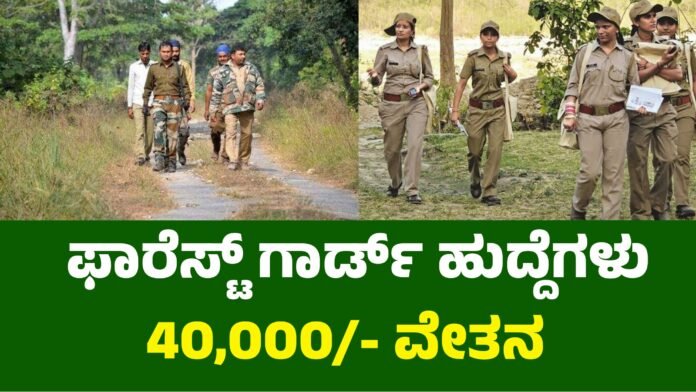
Forest ಫಾರೆಸ್ಟ್ ಗಾರ್ಡ್ ನೇಮಕಾತಿ

0


Karnataka Forest Department: Recruitment Drive for 540 Forest Guards and New Wildlife Protection Measures

The Government of Karnataka has announced a major step towards strengthening forest management and wildlife protection in the state. Addressing the long-pending issue of manpower shortage in the Forest Department, Forest Minister Eshwar Khandre revealed that 540 new Forest Guard posts are being filled through a fresh recruitment process. This initiative is part of the state’s broader efforts to conserve biodiversity, address human-wildlife conflicts, and protect valuable forest resources.

This announcement has not only brought cheer to job aspirants but also highlighted the government’s focus on environmental protection and wildlife conservation, which remain pressing concerns in Karnataka. Let us explore in detail the new recruitment drive, compensation reforms, and the broader measures being introduced by the state government.


Why Karnataka Needs More Forest Guards

Karnataka is home to some of India’s richest forest cover, national parks, and wildlife sanctuaries. From the Western Ghats, a UNESCO World Heritage site, to the Bandipur, Nagarhole, and Bannerghatta National Parks, the state plays a crucial role in protecting endangered species like the tiger, elephant, sloth bear, and countless other flora and fauna.

However, officials have long warned of severe staff shortages in the Forest Department. With vast forest areas to monitor and increasing cases of human-wildlife conflict, the lack of manpower has often left villagers vulnerable and wildlife at risk.

Recruiting 540 new Forest Guards is expected to:

  • Strengthen on-ground forest patrolling.
  • Curb illegal logging, poaching, and sand mining.
  • Help in wildlife rescue operations during conflict situations.
  • Support conservation programs and ecological monitoring.

The government believes this move will create a more responsive and effective forest protection force.


Revised Compensation for Wildlife-Related Incidents

Human-wildlife conflict has been a growing issue in Karnataka, especially in regions adjoining forested areas. Farmers and villagers often lose crops, livestock, and in some tragic cases, their lives due to attacks by elephants, tigers, or snakes.

To address this, the government has revised compensation packages for victims:

  • ₹20 lakh for families of those killed in elephant or tiger attacks.
  • ₹2 lakh compensation in cases of death due to snake bites (handled under the Agriculture Department).

This substantial increase in relief aims to provide financial security to affected families and ensure that they receive timely support in the event of tragedies.


Special Elephant Task Force for Dakshina Kannada

Dakshina Kannada district has witnessed a surge in wild elephant movements and attacks in recent years. Villagers have raised concerns about crop destruction, property damage, and fear of life due to elephants straying into human settlements.

Recognizing the seriousness of the problem, the Karnataka government has approved the creation of a Special Elephant Task Force (SETF) exclusively for Dakshina Kannada.

The task force will:

  • Conduct round-the-clock monitoring of elephant movement.
  • Use modern tracking and GPS technology to predict elephant migration routes.
  • Coordinate with local communities to ensure safe relocation of herds.
  • Implement barriers and warning systems to minimize crop and property damage.

An official order regarding the SETF is expected within the next few days.


Tackling the Monkey Menace

Apart from elephants, farmers in several districts of Karnataka have complained about increasing monkey menace. Crops such as bananas, maize, and fruits often become targets, causing huge financial losses to farmers.

To control this problem, the Forest Department is preparing a structured plan which includes:

  • Setting up teams to safely capture and relocate monkeys.
  • Researching non-lethal deterrent methods.
  • Working with local communities to implement protective farming techniques.

This initiative aims to provide farmers relief from repeated crop losses while ensuring that monkey populations are managed in an eco-friendly and humane manner.


Research Collaboration with IISc Bengaluru

One of the most important announcements is the state’s collaboration with the Indian Institute of Science (IISc), Bengaluru. Under the leadership of Professor R. Sukumar, a well-known wildlife biologist, IISc researchers will study elephant corridors and habitats in Karnataka.

The research project will:

  • Identify and map key elephant corridors across the state.
  • Recommend strategies for habitat conservation and conflict reduction.
  • Guide the government in framing long-term policies on elephant management.

Such research-based policymaking is expected to create a sustainable balance between wildlife conservation and human settlements.


Recruitment Process – What Aspirants Should Know

The recruitment of 540 Forest Guards is expected to attract thousands of applicants from across Karnataka. While the official notification is awaited, candidates can expect the process to include:

  1. Eligibility Criteria
    • Candidates must be Indian citizens.
    • Minimum educational qualification: 10th/12th pass (as per expected guidelines).
    • Age limit: Likely between 18–27 years with relaxation for reserved categories.
  2. Selection Process
    • Written Examination to test general knowledge, reasoning, and environmental awareness.
    • Physical Fitness Test including running, endurance, and physical standards.
    • Interview and Document Verification.
  3. Application Mode
    • Online applications through the Karnataka Forest Department’s official website.
    • Candidates will need to upload educational certificates, ID proof, and other required documents.

This recruitment drive not only opens employment opportunities for rural youth but also ensures that the next generation participates in forest protection and conservation work.


A Step Towards Ecological Balance

The series of announcements – recruitment of new Forest Guards, revision of compensation, creation of a special elephant task force, research collaborations, and tackling monkey menace – reflect Karnataka’s comprehensive approach to ecological governance.

By focusing on manpower, technology, research, and community participation, the government is setting an example in wildlife management and environmental conservation. These efforts are expected to:

  • Reduce human-animal conflict.
  • Strengthen law enforcement inside forest zones.
  • Provide livelihood security to affected villagers.
  • Ensure sustainable forest management for future generations.

Application

Conclusion

Karnataka’s decision to recruit 540 new Forest Guards marks a turning point in the state’s environmental policies. It shows that the government is not only focused on creating jobs but also on building a safer, more sustainable future where forests and humans coexist peacefully.

From protecting elephants and tackling monkey menace to providing relief for victims and collaborating with scientific institutions, the state’s initiatives are holistic and forward-looking. As the recruitment notification is awaited, aspirants and citizens alike are hopeful that these steps will lead to a greener, safer, and more balanced Karnataka.


Farm ರೈತರಿಗೆ ಉಚಿತ ಕೃಷಿ ಹೊಂಡ ನಿರ್ಮಾಣ

0


Farm Pond Subsidy under Krishi Bhagya Scheme in Karnataka – Complete Guide for Farmers

Water scarcity has always been a major challenge for farmers who depend mainly on rainfall for cultivation. To reduce crop loss and provide sustainable irrigation facilities, the Government of Karnataka has reintroduced the Krishi Bhagya Scheme, focusing on the construction of farm ponds (Krishi Honda). Through this initiative, farmers are given financial support to build ponds on their farmland with 80% to 90% subsidy.

This article provides complete details about the farm pond subsidy scheme – eligibility, required documents, unit-wise assistance, application process, and post-sanction procedures.


What is the Krishi Bhagya Scheme?

The Krishi Bhagya Yojana was originally introduced a few years ago by the Department of Agriculture, Government of Karnataka, with the sole aim of supporting rainfed farmers. Due to irregular rainfall, many farmers face crop failure every year. By constructing farm ponds, farmers can store rainwater and use it for irrigation during dry spells.

The scheme was relaunched recently, and selected districts across Karnataka are now implementing it. The government not only supports the construction of farm ponds but also provides subsidies for additional units such as:

  • Field bunds (to store water efficiently)
  • Polythene lining inside the pond
  • Diesel or solar pump sets for water lifting
  • Mini irrigation systems like drip irrigation or sprinkler units
  • Fencing around the pond

In total, six units are covered under this package.


Farm Pond Sizes Available under Subsidy

Farmers can choose from different standard sizes of farm ponds depending on their land area and requirement. The approved dimensions (in meters) are:

  1. 10 x 10 x 3 meters
  2. 12 x 12 x 3 meters
  3. 15 x 15 x 3 meters
  4. 18 x 18 x 3 meters
  5. 21 x 21 x 3 meters

This flexibility ensures that both small and marginal farmers can construct ponds as per their landholding capacity.


Subsidy Benefits

The government provides subsidy support on a percentage basis:

  • 80% subsidy for farmers belonging to the general category
  • 90% subsidy for farmers belonging to SC/ST categories

This means that farmers only need to bear a very small part of the construction cost, making it highly affordable.


Who Can Apply? – Eligibility Criteria

To ensure that the benefits reach genuine farmers, the government has laid down specific eligibility conditions:

  1. The applicant must be a resident of Karnataka.
  2. The applicant should own agricultural land in their name.
  3. Small and marginal farmers are given preference.
  4. Farmers who have not availed farm pond subsidy in previous years are eligible.

Documents Required

Applicants must submit the following documents while applying for the scheme:

  • Copy of Aadhaar Card
  • Passport size photograph
  • Copy of RTC / Pahani / land ownership documents
  • Bank passbook copy for subsidy transfer
  • Caste and income certificate (if applicable)
  • Ration card copy
  • Mobile number for updates

How to Apply for Farm Pond Subsidy?

At present, the Krishi Bhagya scheme is implemented in selected districts of Karnataka. Farmers need to apply through the Raitha Samparka Kendra (RSK) located in their Hobli.

Application process step by step:

  1. Visit your nearest Raitha Samparka Kendra (RSK) under the Department of Agriculture.
  2. Collect the application form for Krishi Bhagya scheme.
  3. Fill in the required details and attach the necessary documents.
  4. Submit the form at RSK and obtain an acknowledgment slip.
  5. Wait for the field inspection and approval.

Selection and Approval Process

  1. After the submission of the application, the field officers will conduct a site inspection of the farmer’s land.
  2. If found eligible, the farmer’s details will be uploaded into the K-KISAN software.
  3. Within a week, the Work Sanction Order (WSO) will be issued along with the estimated cost of construction.
  4. Farmers will also be guided about the Krishi Bhagya package which includes pond construction, lining, fencing, and irrigation units.
  5. Based on the flowchart provided in the software, each stage of the implementation will be documented with GPS photos and measurement records.

Post-Sanction Process

  • After sanction, farmers need to complete the construction as per approved design.
  • The concerned Assistant Agriculture Director and Deputy Agriculture Director will inspect the site after each stage.
  • Expenditure will be reimbursed as per the verified records.
  • Farmers will receive the subsidy amount directly into their bank account once the process is completed.

Why Farm Ponds are Important?

The benefits of constructing a farm pond go beyond irrigation:

  • Water security during dry spells
  • Reduced crop loss due to irregular rainfall
  • Groundwater recharge
  • Option for multi-cropping
  • Fodder cultivation during summer
  • Increased farm income through better productivity

Thus, farm ponds act as a lifeline for small and marginal farmers.


Key Highlights of Krishi Bhagya Farm Pond Scheme

  • Scheme launched by Karnataka Department of Agriculture
  • Farm pond construction with 80–90% subsidy
  • Additional support for lining, pumps, fencing, irrigation systems
  • Eligible for small and marginal farmers only
  • Application through Raitha Samparka Kendras
  • Transparent approval process through K-KISAN software

Application

Conclusion

The Krishi Bhagya Farm Pond Subsidy Scheme is a golden opportunity for Karnataka’s farmers, especially those dependent on rainfall. By applying for this scheme, farmers can secure their crops against drought, improve irrigation facilities, and increase their income. Since the government is bearing up to 90% of the cost, every eligible farmer should take advantage of this initiative.

For more details and updates, farmers can visit the official Karnataka Agriculture Department website or approach their nearest Raitha Samparka Kendra.


Tarpaulin ಸರ್ಕಾರದಿಂದ ಉಚಿತ ಟಾರ್ಪೆಲ್ ವಿತರಣೆ.!

0


Tarpaulin Subsidy Scheme 2025 – Farmers Can Apply for Subsidized Tarpaulin Distribution in Karnataka

The Karnataka State Department of Agriculture has once again opened the doors for farmers to apply for Tarpaulin Subsidy Scheme 2025. Through this program, farmers can purchase tarpaulins at a subsidized rate and use them for agriculture, storage, transportation, and multiple day-to-day needs. Every year, the scheme benefits thousands of farmers across the state, and this year the opportunity has been extended once more.

In this article, let’s explore in detail the importance of tarpaulin for farmers, subsidy details, eligibility, required documents, and application process. Farmers who want to benefit from this scheme should apply as early as possible since the demand is always high and allocation depends on availability.


Why Tarpaulin is Important for Farmers?

Tarpaulin (commonly called Tadapatri) is a multi-purpose essential item for farmers. Its waterproof, durable, and weather-resistant qualities make it extremely useful in agriculture and beyond.

Some of the major uses of tarpaulin include:

  • Crop Protection: Farmers use tarpaulin to cover harvested crops, seeds, and fertilizers, ensuring they are safe from rain, sun, and dust.
  • Storage Support: It is used to build temporary sheds or cover storage areas to protect agricultural produce.
  • Transport Safety: While transporting goods like vegetables, grains, and fruits, tarpaulin is used to cover trucks and tractors to safeguard against damage.
  • Daily Life Utility: Apart from agriculture, tarpaulin is widely used in construction, household works, cattle sheds, and even temporary shelters during natural calamities.

Thus, tarpaulin is not just an optional tool, but a necessity for every farmer. Recognizing its importance, the government provides it at subsidized rates so that even small and marginal farmers can afford it.


Tarpaulin Size under the Scheme

The Agriculture Department of Karnataka has fixed a standard size for distribution under subsidy:

  • Length: 8 meters
  • Width: 6 meters

This large-size tarpaulin can serve multiple purposes, whether it is for crop covering, creating a temporary shed, or transportation.


Subsidy Benefits for Farmers

The amount of subsidy depends on the farmer’s category:

  • General Category Farmers – Eligible for 50% subsidy on tarpaulin purchase.
  • SC/ST Category Farmers – Eligible for 90% subsidy, making it almost free of cost.

This financial support significantly reduces the burden on farmers and encourages them to adopt protective measures for their crops.


Required Documents for Application

Farmers interested in availing the Tarpaulin Subsidy Scheme must keep the following documents ready:

  1. Aadhaar Card Copy (for identity verification)
  2. Land Ownership Record (RTC/Pahani)
  3. Passport-size Photograph
  4. Bank Passbook Copy (for subsidy transfer)
  5. Mobile Number (for communication and updates)

Where to Apply?

Eligible farmers can apply directly by visiting the Farmer Contact Center (Raitha Samparka Kendra) located at the Hobli level under the Department of Agriculture. The application must be submitted in person along with all required documents.


Districts Invited for Applications

Currently, the Department of Agriculture has started accepting applications in Puttur Taluk of Dakshina Kannada District. However, other districts will also open the scheme based on budget and availability of funds.

Farmers are advised to regularly check with their nearest Agriculture Department offices to know when applications will be invited in their respective districts.


Distribution Process

Due to high demand for subsidized tarpaulins, the department follows specific allocation methods:

  • First Come First Serve: In some districts, tarpaulins are distributed to farmers who apply earliest.
  • Lottery System: Where applications exceed supply, a lottery is conducted to ensure fair distribution.

Hence, applying early increases the chances of securing a subsidized tarpaulin.


Additional Benefits from the Agriculture Department

Alongside tarpaulin distribution, the Agriculture Department also provides other support to farmers:

  • Subsidized Seeds Distribution: With the monsoon approaching, preparations are underway to distribute various seeds at subsidized rates. Warehousing of seeds is being done to ensure timely supply.
  • Subsidy on Pump Set Repairs & Other Equipment: Farmers are also encouraged to apply for training and repair programs that help in cost-effective farming.
  • Support for Small Agricultural Entrepreneurs: Through different schemes, farmers can start small-scale agri-businesses with financial assistance.

Key Instructions for Farmers

  1. Demand for subsidized tarpaulin is very high in all parts of Karnataka.
  2. Availability depends on district-level budget allocation.
  3. Farmers are advised to submit applications as soon as possible to avoid missing out.
  4. In certain cases, distribution may happen via lottery if applications exceed the stock.
  5. Farmers can track official announcements through the Agriculture Department’s official website.

👉 Visit Karnataka Agriculture Department Website for latest updates.


Application

Conclusion

The Tarpaulin Subsidy Scheme 2025 by the Karnataka Agriculture Department is an excellent initiative that helps farmers protect their produce, store goods safely, and reduce financial burden. By offering 50% to 90% subsidy, the government ensures that both general and marginalized farmers get equal benefits.

Every farmer should take advantage of this scheme by preparing the necessary documents and submitting the application on time. With rising climatic uncertainties, a durable tarpaulin can save farmers from heavy losses.

So, if you are a farmer in Karnataka, don’t delay—apply at your nearest Raitha Samparka Kendra and secure your subsidized tarpaulin today!


Borewell ಬೋರ್ವೆಲ್ ಹಾಕಿಸಲು 4.75 ಲಕ್ಷ ಸಹಾಯಧನ.!

0


Borewell Subsidy Scheme 2025: Apply for ₹4.25 Lakh Assistance under Ganga Kalyana Yojana

Access to reliable irrigation is one of the biggest challenges for small and marginal farmers in Karnataka. Without a steady supply of water, farmers often face crop losses, reduced productivity, and unstable income. To address this challenge, the Department of Social Welfare has introduced the Borewell Ganga Kalyana Borewell Subsidy Scheme, which provides financial assistance to eligible farmers for drilling borewells and installing pump sets.

This scheme is designed specifically to support economically weaker sections of farmers who belong to Scheduled Castes (SC), Scheduled Tribes (ST), and other backward communities. By ensuring irrigation facilities, the scheme aims to improve agricultural productivity and enable farmers to diversify into horticulture, floriculture, and other income-generating crops.

In this article, we provide a detailed guide about the Borewell Subsidy Scheme 2025—covering subsidy amount, eligibility, required documents, application procedure, and deadlines.


Objectives of the Borewell Subsidy Scheme

The primary objectives of the Ganga Kalyana Yojana are:

  • To provide permanent irrigation facilities for small and marginal farmers.
  • To enable farmers to drill borewells at subsidized costs.
  • To supply pump sets and ensure electrification for running borewell motors.
  • To reduce dependency on rainwater and ensure round-the-year cultivation.
  • To encourage farmers to take up cash crops, horticulture, and allied activities to increase income.

By providing up to ₹4.25 lakh subsidy, the scheme removes the financial burden of borewell installation, which is otherwise unaffordable for weaker sections.


Subsidy Details under Ganga Kalyana Yojana

The subsidy amount differs based on the location of the farmer’s land and groundwater availability.

  • Kolar, Chikkaballapur, Bengaluru Rural, Bengaluru Urban, Tumakuru, and Ramanagara districts
    • Unit cost: ₹4.75 lakh
    • Subsidy: ₹4.25 lakh
    • Loan portion: ₹50,000
  • Other districts in Karnataka
    • Unit cost: ₹3.75 lakh
    • Subsidy: ₹3.25 lakh
    • Loan portion: ₹50,000

Additionally, electrification of borewells is supported with ₹75,000 per unit, which is released directly to the concerned ESCOM (Electricity Supply Company).


Eligibility Criteria

To apply for the Borewell Subsidy Scheme, farmers must meet the following conditions:

  1. Applicant must be a permanent resident of Karnataka.
  2. Only farmers belonging to categories under Social Welfare Corporations (SC/ST/OBC/Minorities) can apply.
  3. Farmers who have already received subsidy under this scheme in previous years are not eligible.
  4. Applicant must be a small or marginal farmer owning between 1.20 acres and 5 acres of land.
  5. Applicant must be at least 21 years old. (There is no upper age limit.)
  6. The applicant’s annual family income should not exceed:
    • ₹1.5 lakh for rural households
    • ₹2.0 lakh for urban households
  7. No member of the applicant’s family should be employed in any government or semi-government organization.
  8. The applicant must not already have irrigation facilities.
  9. In the case of differently-abled farmers, a valid disability certificate issued by the District Disabled Welfare Officer must be provided.

Required Documents

When applying online, the following documents are mandatory:

  • Aadhaar Card
  • Ration Card
  • Voter ID
  • Caste & Income Certificate
  • Recent passport-size photograph
  • RTC/Pahani (land ownership certificate)
  • Small/Marginal farmer certificate
  • Self-declaration that subsidy has not been availed earlier
  • Disability certificate (if applicable)

Application Procedure

Farmers can apply through Seva Sindhu Portal or by visiting the nearest Grama One/Karnataka One centers.

Step-by-Step Online Application:

  1. Visit Seva Sindhu Portal – Go to the official portal and search for “Ganga Kalyana Yojana Application”.
  2. Select the Service – Under the list of available services, click on “Apply Online for Borewell Subsidy”.
  3. Login/Register – Enter your User ID and Password, or create a new account if you are a first-time user.
  4. Fill Application Form – Provide personal details, land information, income details, and upload the required documents.
  5. Submit Application – After verifying details, click on the Submit button. An acknowledgment slip will be generated for future reference.

Application Deadline

The last date to apply for Borewell Subsidy under Ganga Kalyana Yojana is 10th September 2025. Farmers are advised to complete their applications well before the deadline to avoid technical delays.


Helpline & Contact Information


Benefits of the Borewell Subsidy Scheme

  • Ensures permanent irrigation for rain-dependent farmers.
  • Reduces crop failure and increases yield.
  • Enables crop diversification and horticulture.
  • Reduces migration of farmers seeking alternate jobs.
  • Empowers marginalized communities with financial support.

Frequently Asked Questions (FAQ)

1. Who is eligible to apply for this subsidy?
Only small and marginal farmers belonging to SC/ST and other backward categories with limited landholding and income are eligible.

2. Can a farmer who already has a borewell apply again?
No. Farmers with existing irrigation facilities are not eligible.

3. Is there an age limit for applicants?
Yes. The applicant must be at least 21 years old, but there is no upper age limit.

4. How much subsidy will a farmer get?
The subsidy amount is either ₹3.25 lakh or ₹4.25 lakh, depending on the district.

5. What if groundwater levels are very low in my area?
In districts with critical groundwater levels, the unit cost is revised to ₹4.75 lakh, with a higher subsidy of ₹4.25 lakh.

6. How to track the application status?
Farmers can log in to the Seva Sindhu Portal using their registered ID and check the status of their application.


Application

Conclusion

The Borewell Subsidy Scheme 2025 (Ganga Kalyana Yojana) is a life-changing opportunity for small and marginal farmers in Karnataka. With financial support up to ₹4.25 lakh, farmers can drill borewells, install pumps, and ensure irrigation for their fields. This scheme not only boosts agricultural productivity but also strengthens rural livelihoods.

Farmers who meet the eligibility criteria must apply online before 10th September 2025 to benefit from this initiative.