Tuesday, November 24, 2026
spot_img
Home Blog Page 88

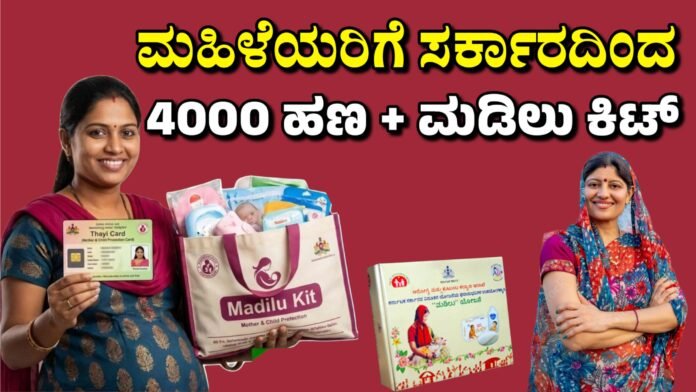
Madilu Kit ಗರ್ಭಿಣಿಯರಿಗೆ & ಮಕ್ಕಳಿರುವ ಮಹಿಳೆಯರಿಗೆ ಸರ್ಕಾರದಿಂದ ₹4,000 ಹಣ & ಮಡಿಲು ಕಿಟ್ ವಿತರಣೆ

0


Prasuthi Araike Scheme 2025: ₹4,000 Financial Assistance for Pregnant Women + Free Madilu Kit | Complete Guide

Due to poverty, lack of awareness, and poor nutrition, many pregnant women—especially from economically weaker families—are unable to take proper care of their health during pregnancy. This often affects not only the mother but also the health of the newborn child.

To address this serious issue and ensure safe motherhood, the Government of Karnataka has implemented a welfare initiative called the Prasuthi Araike Scheme. This scheme is designed to provide financial support, nutritional security, and healthcare assistance to pregnant women and new mothers.

This is not just a cash benefit scheme—it is a comprehensive maternal and child health protection program.


What Is the Objective of the Prasuthi Araike Scheme?

The main goals of this scheme are:

  • To improve nutritional intake among pregnant women
  • To reduce maternal and infant mortality rates
  • To encourage safe deliveries in government hospitals
  • To provide financial relief during pregnancy and childbirth
  • To promote regular antenatal check-ups
  • To ensure better health outcomes for both mother and baby

How Much Financial Assistance Is Provided?

The Karnataka government releases the benefit amount in two installments, based on the beneficiary’s social category.

🔹 BPL (Below Poverty Line) – General Category

  • Total Assistance: ₹2,000
  • 1st Installment: ₹1,000 during pregnancy
  • 2nd Installment: ₹1,000 after delivery

🔹 SC / ST Category Women

  • Total Assistance: ₹3,000 to ₹4,000
  • Includes benefits under the Janani Suraksha Yojana (JSY)
  • Amount is credited directly after childbirth

👉 All payments are made through Direct Benefit Transfer (DBT) to the beneficiary’s bank account.


What Is the Free Madilu Kit?

Women who deliver in government hospitals are provided with a Madilu Kit free of cost at the time of hospital discharge.

🎁 Items Included in the Madilu Kit:

  • Newborn baby clothes
  • Baby soap, powder, and oil
  • Mosquito net
  • Baby bedding essentials
  • Basic hygiene and care items for the mother

👉 This kit supports newborn care during the crucial first days after birth and reduces financial burden on poor families.


Eligibility Criteria for Prasuthi Araike Scheme

To avail the benefits of this scheme, the applicant must meet the following conditions:

  1. Must be a permanent resident of Karnataka
  2. Must possess a BPL ration card
    (or SC/ST caste certificate)
  3. Benefits are available only for the first two live births
  4. Must undergo regular antenatal check-ups at government hospitals
  5. Aadhaar card must be linked with a bank account

How to Apply for the Prasuthi Araike Scheme?

There is no need for online application. The process is simple and offline.

📝 Step-by-Step Application Process:

Step 1:
As soon as pregnancy is confirmed, contact the nearest Anganwadi Centre or ASHA worker.

Step 2:
They will register your details and issue a Thayi Card / ANC Card.

Step 3:
Submit your Aadhaar details, bank account information, and other required documents.

Step 4:
Attend regular health check-ups at a government hospital.

Step 5:
Once eligibility is verified, the financial assistance is credited directly to your bank account.


Required Documents List

  • Thayi Card / RCH Number
  • Aadhaar Card
  • Bank Passbook (Nationalised Bank)
  • BPL Ration Card
  • Caste Certificate (for SC/ST)
  • Income Certificate

Why Is This Scheme Important?

The Prasuthi Araike Scheme has become a lifeline for thousands of low-income families in Karnataka. It reduces financial stress during childbirth, encourages institutional deliveries, and ensures healthier mothers and babies.

For rural women in particular, this scheme provides health security, financial confidence, and social support during one of the most critical phases of life.


Application Link

Final Words

If you or someone in your family is pregnant and meets the eligibility criteria, do not miss this opportunity. This scheme is not just financial aid—it is an investment in a healthy future for both mother and child.
Bank ಬ್ಯಾಂಕ್ ಆಫ್ ಇಂಡಿಯಾ 514 ಕ್ರೆಡಿಟ್ ಆಫೀಸರ್ ಹುದ್ದೆಗಳಿಗೆ ಅರ್ಜಿ ಆಹ್ವಾನ.!

0


 Bank of India Recruitment 2025

514 Credit Officer Vacancies Announced – Apply Online for a Prestigious Banking Career

The Bank of India (BOI), one of India’s leading public sector banks, has officially released the Bank of India Recruitment 2025 notification inviting applications from eligible and motivated candidates for Credit Officer posts. This recruitment drive offers a golden opportunity for graduates and postgraduates who aspire to build a long-term, stable, and respected career in the banking sector.

Through this recruitment process, BOI aims to fill 514 Credit Officer vacancies across different grades. Selected candidates will be posted at various BOI branches across India as per the bank’s operational requirements.

This article provides a complete and easy-to-understand overview of vacancies, eligibility criteria, age limit, salary structure, selection process, application procedure, fees, and important dates.


📌 Vacancy Details

Bank of India is recruiting Credit Officers at multiple managerial levels. The category-wise vacancy distribution is given below:

Post Name Number of Vacancies
Credit Officer – MMGS-II 418
Credit Officer – MMGS-III 60
Credit Officer – SMGS-IV 36
Total 514

📍 Job Location

Candidates selected under this recruitment will be posted at any Bank of India branch across India.
👉 Transfers are subject to bank rules and administrative requirements.


🎓 Educational Qualification

🔹 Credit Officer (MMGS-II & MMGS-III)

  • Graduation from a recognized university
  • Minimum 60% marks
  • 55% marks for SC / ST / OBC / PwBD candidates

🔹 Credit Officer (SMGS-IV)

  • Graduation from a recognized university
  • MBA / PGDBM in Finance, Banking, or related discipline
  • Minimum 60% marks
  • 55% marks for reserved categories

🎂 Age Limit (as on 01 November 2025)

Post Minimum Age Maximum Age
MMGS-II 25 Years 35 Years
MMGS-III 28 Years 38 Years
SMGS-IV 30 Years 40 Years

🔸 Age Relaxation

  • SC / ST: 5 years
  • OBC: 3 years
  • PwBD: 10 years

💰 Salary Structure

Bank of India offers an attractive pay scale along with multiple allowances and benefits.

Post Monthly Salary Range
MMGS-II ₹64,820 – ₹93,960
MMGS-III ₹85,920 – ₹1,05,280
SMGS-IV ₹1,02,300 – ₹1,20,940

👉 In addition to basic pay, employees are entitled to DA, HRA, TA, medical benefits, pension, provident fund, and other perks as per bank rules.


📝 Selection Process

The selection of candidates will be conducted in two stages:

  1. Online Written Examination
  2. Personal Interview

Candidates shortlisted in the online test will be called for the interview. Final selection will be based on overall performance and merit.


💻 How to Apply Online

Eligible candidates must submit their applications online only.

Step-by-Step Application Process:

  1. Carefully read the official notification before applying
  2. Keep all required documents ready (certificates, photo, signature)
  3. Visit the official Bank of India website
  4. Click on the online application link
  5. Fill in personal, educational, and professional details
  6. Upload scanned copies of documents if required
  7. Pay the application fee
  8. Submit the application and take a printout for future reference

💳 Application Fee

Category Fee Amount
SC / ST / PwBD ₹175
General / OBC / Others ₹850

💰 Payment Mode

  • Debit Card
  • Credit Card
  • Net Banking
  • UPI

📅 Important Dates

  • 🟢 Application Start Date: 20 December 2025
  • 🔴 Last Date to Apply: 05 January 2026

👉 Candidates are advised to apply well before the closing date to avoid last-minute technical issues.


✅ Who Should Apply?

  • Graduates looking for a secure government banking job
  • Candidates interested in credit management and banking operations
  • Aspirants seeking high salary, job stability, and career growth
  • Individuals aiming for managerial roles in public sector banks

Application Link

🔚 Conclusion

The Bank of India Recruitment 2025 presents a valuable opportunity for banking aspirants across India. With 514 vacancies, attractive pay scales, and the prestige of working in a nationalized bank, this recruitment drive should not be missed. If you meet the eligibility criteria, apply online at the earliest and take a confident step toward a successful banking career.

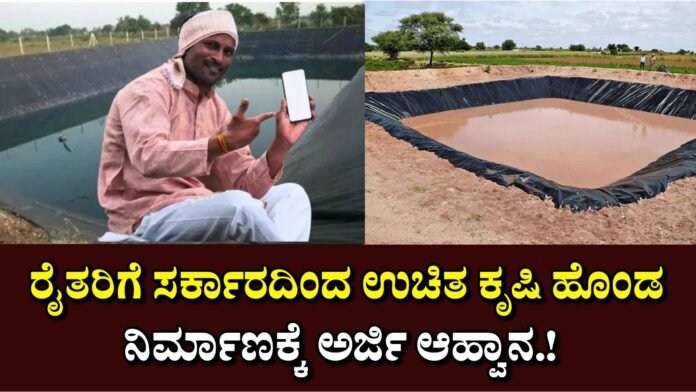
Krishi Bhagya ಕೃಷಿ ಹೊಂಡ ನಿರ್ಮಾಣ ಮಾಡಲು ರೈತರಿಗೆ 90% ಸಬ್ಸಿಡಿ

0


Krishi Bhagya Scheme 2025: End Water Worries, Build a Farm Pond with Up to 90% Subsidy and Boost Your Farm Income

Farming in Karnataka has long depended on seasonal rainfall. For many farmers, a good harvest means timely rains, while delayed or insufficient rainfall often leads to crop loss, financial stress, and mounting debt. Understanding this ground reality, the Karnataka government introduced a powerful and practical solution — the Krishi Bhagya Scheme.

This scheme focuses on rainwater harvesting at the farm level by helping farmers build farm ponds and adopt efficient irrigation systems. With government subsidies going up to 90%, farmers can now protect their crops even during dry spells and significantly improve their income.


What Is the Krishi Bhagya Scheme?

In simple terms, the Krishi Bhagya Scheme is designed to store rainwater and reuse it when crops need it most. Instead of letting rainwater flow away unused, farmers can collect it in a farm pond constructed on their own land.

The scheme does not stop at pond construction. It provides a complete support package, including water storage, pumping systems, micro-irrigation, and fencing — making it one of the most farmer-friendly initiatives in the state.


Major Announcement in the 2025–26 Karnataka Budget

In the 2025–26 state budget, Chief Minister Siddaramaiah announced the construction of 12,000 new farm ponds under the Krishi Bhagya Scheme. This decision has opened up a golden opportunity for farmers, especially those living in drought-prone areas.

The government’s goal is clear: help farmers become self-reliant in water management and reduce their dependence on unpredictable monsoons.


Objectives of the Krishi Bhagya Scheme

The scheme was launched with several long-term objectives:

  • Efficient utilization of rainwater
  • Protection of crops during dry periods
  • Promotion of micro-irrigation techniques
  • Increase in agricultural productivity
  • Improvement in farmers’ annual income
  • Reduction in groundwater over-extraction

Facilities Provided Under the Krishi Bhagya Scheme

Farmers receive multiple benefits under this scheme in a single integrated package:

1️⃣ Farm Pond Construction

A farm pond is excavated within the farmer’s land to store rainwater. This water can later be used for irrigation during dry days or delayed monsoons.

2️⃣ Polythene Lining

To prevent water seepage into the soil, the pond is lined with a polythene sheet, ensuring maximum water retention for longer periods.

3️⃣ Pump Set Support

Farmers are provided financial assistance to install:

  • Diesel pump
  • Petrol pump
  • Or solar pump
    This helps lift water from the pond to the fields easily.

4️⃣ Micro-Irrigation Systems

To save water and improve crop yield, the scheme supports:

  • Drip irrigation
  • Sprinkler irrigation
    These methods use less water while ensuring uniform distribution.

5️⃣ Protective Fencing

To prevent accidents and damage by animals, fencing is provided around the farm pond.


Subsidy Details Under Krishi Bhagya Scheme

The government offers subsidies based on farmer category, ensuring inclusive benefits.

Facility General Category SC / ST Category
Farm pond construction 80% subsidy 90% subsidy
Polythene lining 80% subsidy 90% subsidy
Diesel / Solar pump 50% subsidy 90% subsidy
Fencing 40% subsidy 50% subsidy
Drip / Sprinkler irrigation 90% subsidy 90% subsidy

👉 This significantly reduces farmers’ financial burden and encourages adoption of modern irrigation practices.


Eligibility Criteria

To apply for the Krishi Bhagya Scheme, farmers must meet the following conditions:

  • Must own at least 1 acre of agricultural land
  • Applicant must be a resident of Karnataka
  • Priority is given to farmers from 24 drought-prone districts (106 taluks)
  • Farmer ID (FID) is mandatory
  • The farmer should not have received pump set or micro-irrigation subsidy in the last 3 years
    (This restriction does not apply to farm pond construction)

Required Documents

Applicants need to submit the following documents:

  • RTC / Land record (Pahani)
  • Aadhaar card
  • Bank passbook copy
  • Caste certificate (for SC/ST applicants)
  • Passport-size photograph

How to Apply for the Krishi Bhagya Scheme

⚠️ Offline application is recommended for faster processing.

Where to Apply:

  • Nearest Raitha Samparka Kendra (RSK)
  • Or Taluk Assistant Director of Agriculture Office

Application Process:

  1. Visit the RSK or agriculture office
  2. Submit the application form with documents
  3. Field inspection by agriculture officials
  4. Approval and subsidy sanction if eligible

Benefits of the Krishi Bhagya Scheme for Farmers

  • Crops remain protected even during low rainfall
  • Enables year-round cultivation of vegetables and horticulture crops
  • Reduces irrigation costs
  • Improves crop yield and quality
  • Creates stable and sustainable farm income
  • Reduces dependency on loans and borewells

Application Link

Why Every Eligible Farmer Should Apply

With climate uncertainty increasing every year, water management has become essential for successful farming. The Krishi Bhagya Scheme empowers farmers to take control of water resources, reduce risks, and move towards profitable agriculture.

If you are eligible, do not miss this opportunity. Visit your nearest Raitha Samparka Kendra and apply at the earliest.

👉 Store rainwater today and secure your farming future tomorrow.


Anganwadi Recruitment ಅಂಗನವಾಡಿ ನೇಮಕಾತಿ

0

Anganwadi Recruitment 2025–26: 1,787 Government Job Vacancies for Women in Karnataka

The Government of Karnataka has brought excellent news for unemployed and eligible women across the state. The Department of Women and Child Development (DWCD), Karnataka, has officially released the Anganwadi Recruitment Notification for the year 2025–26, inviting online applications for 1,787 vacant posts of Anganwadi Workers and Anganwadi Helpers in various districts.

Women who are looking for a secure government job, especially in rural and semi-urban areas, should not miss this opportunity. This article provides complete details including district-wise vacancies, eligibility criteria, age limit, application process, required documents, and important dates.


Why Is Anganwadi Recruitment Important?

Anganwadi centers play a vital role in:

  • Child nutrition and health care
  • Support for pregnant and lactating women
  • Early childhood education
  • Social welfare at the grassroots level

Women appointed as Anganwadi Workers and Helpers directly contribute to community development while enjoying the benefits of a government-supported job close to their residence.


Recruitment Overview

Details Information
Recruiting Authority Department of Women and Child Development, Karnataka
Post Name Anganwadi Worker & Anganwadi Helper
Total Vacancies 1,787
Application Mode Online
Job Location Tumakuru, Raichur, Mysuru, Uttara Kannada
Selection Process Merit-based

District-Wise Vacancy Details & Last Dates

Recruitment is currently active in four major districts, and preference will be given to local women candidates of the respective districts.


1️⃣ Tumakuru District

Tumakuru has the highest number of vacancies, spread across 11 Child Development Project areas.

  • Total Vacancies: 946
  • Last Date to Apply: 09 January 2026

This is a golden opportunity for women residing in Tumakuru district.


2️⃣ Raichur District

Recruitment is being conducted across 8 Child Development Project areas in Raichur.

  • Total Vacancies: 340
  • Last Date to Apply: 07 January 2026

3️⃣ Mysuru District

Several Anganwadi centers across Mysuru district require Workers and Helpers.

  • Total Vacancies: 272
  • Last Date to Apply: 30 December 2025

4️⃣ Uttara Kannada District

Women from coastal and rural regions of Uttara Kannada have a great opportunity to secure government employment.

  • Total Vacancies: 229
  • Last Date to Apply: 31 December 2025

Educational Qualification

Candidates must meet the following educational criteria:

🔹 Anganwadi Worker

  • Must have passed PUC / 12th Standard

🔹 Anganwadi Helper

  • Must have passed SSLC / 10th Standard

Higher qualifications are allowed, but minimum qualification is mandatory.


Age Limit

  • Minimum Age: 19 years
  • Maximum Age: 35 years

Age Relaxation

  • Persons with Disabilities: 10 years relaxation
  • Other relaxations as per government norms

Required Documents

Candidates must upload scanned copies of the following documents while applying online:

  • Birth certificate or SSLC marks card (for date of birth proof)
  • SSLC / PUC marks cards
  • Residence certificate (mandatory)
  • Caste certificate
  • Aadhaar card / Voter ID / Ration card
  • Special category certificates (Widow / Divorced / Disabled – if applicable)

⚠️ Ensure all documents are clear and valid.


How to Apply Online for Anganwadi Recruitment 2025–26

Follow these steps carefully:

  1. Visit the official website of the Department of Women and Child Development, Karnataka
  2. Click on “Anganwadi Worker / Helper Recruitment” link
  3. Select your district, taluk, and post
  4. Fill in all personal and educational details accurately
  5. Upload the required documents
  6. Click on Submit
  7. Save or print the application form for future reference

Application Link

Who Should Apply?

This recruitment is ideal for:

  • Women seeking government jobs
  • Rural and semi-urban women
  • Candidates interested in child welfare and social service
  • Women looking for stable income and job security

Important Advice for Applicants

  • Do not wait until the last date to apply
  • Read your district’s notification carefully
  • Enter correct information to avoid rejection
  • Keep copies of uploaded documents and application form


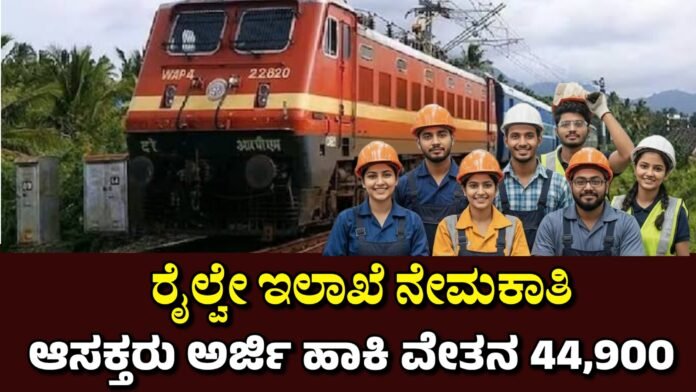
RRB Recruitment ರೈಲ್ವೆ ಇಲಾಖೆ ನೇಮಕಾತಿ ವೇತನ 44,900/-

0


RRB Recruitment 2025–26: Apply Online for 311 Railway Jobs | Junior Translator and Other Posts

Indian Railways is one of the largest employers in the world and a dream destination for millions of job aspirants in India. Every year, the Railway Recruitment Board (RRB) releases multiple notifications offering secure, well-paid, and prestigious government jobs. Once again, RRB has brought a golden opportunity for candidates looking for a stable career in the central government sector.

As per the latest notification, RRB Recruitment 2025–26 has announced 311 vacancies for various posts, including Junior Translator (Hindi), Senior Publicity Inspector, Lab Assistant, Chief Law Assistant, and more. These jobs are open to candidates across India and offer excellent salary packages, allowances, and long-term career growth.

This article provides complete details about RRB Recruitment 2025, including vacancy details, eligibility criteria, age limit, salary structure, selection process, application procedure, and important dates.


RRB Recruitment 2025 – Overview

Details Information
Organization Name Railway Recruitment Board (RRB)
Total Vacancies 311
Job Location All India
Recruitment Year 2025–26
Application Mode Online
Official Website indianrailways.gov.in

RRB Vacancy Details 2025

RRB has announced multiple posts under this recruitment drive. The number of vacancies and age limits vary depending on the post.

Post Name Number of Posts Age Limit
Senior Publicity Inspector 15 18 – 33 Years
Lab Assistant 39 18 – 30 Years
Chief Law Assistant 22 18 – 40 Years
Junior Translator (Hindi) 202 18 – 33 Years
Staff & Welfare Inspector 24 As per RRB norms
Public Prosecutor 7 18 – 32 Years
Scientific Assistant (Training) 2 18 – 35 Years

👉 Junior Translator (Hindi) has the highest number of vacancies, making it a major highlight of this recruitment.


Junior Translator Post – Key Information

The Junior Translator position is an excellent opportunity for candidates with strong language and translation skills. Selected candidates will work in official railway departments and assist in language translation and documentation.

Responsibilities:

  • Translation of official documents
  • Hindi-English language support
  • Preparation of reports and official communication
  • Assistance in administrative work

Educational Qualification

According to the official RRB notification:

  • Candidates must have completed Graduation or Post-Graduation from a recognized university or board
  • Educational qualifications vary depending on the post
  • Candidates are advised to check the official notification carefully for post-wise qualification details

⚠️ Applications without required qualifications may be rejected.


RRB Salary Structure 2025

Railway jobs are known for attractive salary packages along with government allowances.

Post Name Monthly Salary
Senior Publicity Inspector ₹35,400
Lab Assistant ₹19,900
Chief Law Assistant ₹44,900
Junior Translator ₹35,400
Public Prosecutor ₹44,900
Scientific Assistant (Training) ₹35,400

👉 In addition to basic pay, employees receive DA, HRA, TA, medical benefits, and pension benefits as per central government rules.


Age Relaxation

Age relaxation is applicable for reserved category candidates as per government norms.

  • OBC Candidates – 3 Years
  • SC / ST Candidates – 5 Years
  • PwBD (UR / EWS) – 10 Years
  • PwBD (OBC) – 13 Years
  • PwBD (SC / ST) – 15 Years

Selection Process

The selection process for RRB Recruitment 2025 is transparent and merit-based. It generally includes the following stages:

  1. Computer Based Test (CBT)
  2. Document Verification
  3. Medical Examination
  4. Interview (if applicable)

Candidates who perform well in the CBT will be shortlisted for further stages.


Application Fee

The application fee details will be available in the official RRB notification.
Fee exemption or concession may apply for reserved categories as per rules.


How to Apply for RRB Recruitment 2025

Candidates must apply online only by following the steps below:

  1. Visit the official RRB website
  2. Read the recruitment notification carefully
  3. Ensure you meet all eligibility criteria
  4. Keep a valid email ID and mobile number ready
  5. Prepare scanned copies of required documents
  6. Click on the “Apply Online” link
  7. Fill in all details correctly in the application form
  8. Upload photograph and documents
  9. Pay the application fee (if applicable)
  10. Submit the application form
  11. Save the Application Number for future reference

Important Dates

Event Date
Start Date to Apply Online 30 December 2025
Last Date to Apply Online 29 January 2026

⚠️ Candidates are advised not to wait until the last date to apply.


Why Choose a Career in Indian Railways?

  • Permanent central government job
  • Attractive salary and allowances
  • High job security
  • Promotion and career growth opportunities
  • Pension and retirement benefits
  • Social respect and stability

Application Link

Final Words

RRB Recruitment 2025–26 is a valuable opportunity for candidates aspiring for a secure and prestigious government job. With 311 vacancies across India, this recruitment drive opens doors for candidates from different educational backgrounds. The Junior Translator post, in particular, offers an excellent career for language professionals.

If you are eligible and interested, do not miss this chance. Apply online before the deadline and take a strong step toward a stable future with Indian Railways.

RD Scheme ಪೋಸ್ಟ್ ಆಫೀಸ್ ನಲ್ಲಿ 333 ರೂಪಾಯಿ ಕಟ್ಟಿದ್ರೆ 17 ಲಕ್ಷ ಸಿಗುತ್ತೆ.!

0


Save Just ₹333 a Day and Receive Over ₹17 Lakh in 10 Years! A Complete Guide to the Post Office RD Scheme

In today’s fast-paced and expensive lifestyle, saving money often feels like a challenge. Many people believe that building wealth requires a high income or large investments. However, the truth is that small, consistent savings can create a big financial cushion over time.

If you are looking for a safe, government-backed savings plan with guaranteed returns, the Post Office Recurring Deposit (RD) Scheme is one of the best options available. By saving just ₹333 per day, which comes to ₹10,000 per month, you can accumulate more than ₹17 lakh in 10 years.


What Is the Post Office Recurring Deposit (RD) Scheme?

The Post Office RD scheme is a long-term savings plan supported by the Government of India. Under this scheme, investors deposit a fixed amount every month for a chosen period. At maturity, they receive the total deposited amount along with interest.

Key Features:

  • Fully backed by the Central Government
  • Safe and risk-free investment
  • Ideal for salaried and middle-income families
  • Encourages disciplined monthly savings
  • Compound interest benefits

How ₹333 a Day Can Build Wealth

Many people spend small amounts daily on tea, snacks, or unnecessary expenses. If you redirect just ₹333 per day towards savings, the results can be remarkable.

Monthly & Long-Term Breakdown:

  • Daily saving: ₹333
  • Monthly investment: ₹10,000
  • Yearly investment: ₹1,20,000
  • Total investment in 10 years: ₹12,00,000

With interest added, your total maturity amount becomes ₹17 lakh or more.


Interest Rate and the Power of Compounding

The Post Office RD currently offers an annual interest rate of 6.7%, which is compounded quarterly.

Why Compounding Matters:

  • Interest is calculated on both principal and accumulated interest
  • Long-term investments grow faster
  • The longer the tenure, the higher the returns

This compounding effect is what helps your ₹12 lakh investment grow into over ₹17 lakh.


Estimated Returns After 10 Years

Details Amount
Monthly Deposit ₹10,000
Investment Period 10 Years
Total Principal ₹12,00,000
Approximate Interest ₹5,00,000+
Maturity Amount ₹17,00,000+

Note: Interest rates are revised periodically by the government, but Post Office schemes are known for stability and reliability.


How to Open a Post Office RD Account

Opening a Post Office RD account is simple and hassle-free.

Steps to Open an RD Account:

  1. Visit your nearest Post Office
  2. Submit KYC documents (Aadhaar, PAN, photo)
  3. Minimum deposit starts from ₹100
  4. Choose your monthly deposit amount
  5. Set up auto-debit for convenience

Many post offices also provide online and mobile banking services for easy account management.


Best Savings Option for Children’s Future

The Post Office RD scheme is an excellent choice for planning your child’s education and future expenses.

  • RD accounts can be opened in the name of children aged 10 years and above
  • Parents or guardians can operate the account
  • After turning 18, the child can manage the account independently
  • Ideal for higher education, skill training, or career planning

Loan Facility in Case of Emergency

Another major benefit of the RD scheme is the loan facility.

  • Loans are available after completing one year
  • Up to 50% of the deposited amount can be taken as a loan
  • Interest charged is only 2% above the RD interest rate

This feature ensures liquidity without breaking your long-term savings plan.


Premature Closure Rules

While the RD scheme encourages long-term savings, premature closure is allowed under certain conditions.

  • Account can be closed after 3 years
  • Standard tenure is 5 years, with extension options
  • In case of the account holder’s death, the amount is paid to the nominee

Who Should Invest in This Scheme?

The Post Office RD scheme is ideal for:

  • Salaried employees
  • Self-employed individuals
  • Homemakers
  • Middle-class families
  • Parents planning for children’s future
  • Retired individuals seeking safe investments

Application Link

Final Thoughts

You don’t need a large income to build wealth—just consistency and discipline. The Post Office Recurring Deposit scheme proves that small daily savings can turn into a significant financial asset.

With government security, steady returns, and the power of compounding, this scheme is one of the safest and smartest ways to plan your future. Start saving today, and let time and discipline work in your favor.

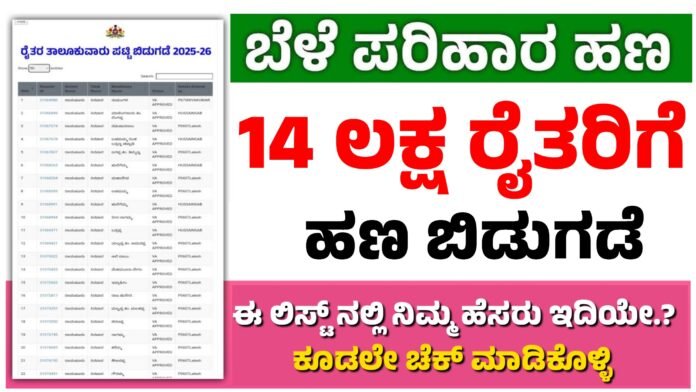
Parihara 14 ಲಕ್ಷ ರೈತರಿಗೆ ಬೆಳೆ ಪರಿಹಾರ ಹಣ ಬಿಡುಗಡೆ

0


Parihara Major Relief for Karnataka Farmers: ₹2,249 Crore Crop Compensation Credited to Over 14 Lakh Farmers’ Accounts

Check Your Name in the Beneficiary List Easily Using Your Mobile Phone

The Karnataka government has delivered significant relief to the state’s farming community by depositing crop loss compensation directly into the bank accounts of affected farmers. Due to heavy rainfall, floods, and excessive monsoon conditions during the 2025–26 Kharif season, agricultural crops across several districts suffered extensive damage. Responding to this crisis, the state government has released a record amount as crop damage compensation (Input Subsidy).

This important announcement was officially made by Revenue Minister Krishna Byre Gowda during the Belagavi Assembly session. According to the minister, the compensation amount has already reached eligible farmers through a transparent and direct payment system.


💰 How Much Compensation Has Been Released and Who Benefited?

The Karnataka government has provided one of the largest crop compensation packages in recent years to support farmers affected by monsoon-related disasters.

🔹 Key Highlights:

  • Total compensation released: ₹2,249 crore
  • Total beneficiaries: 14.21 lakh farmers
  • Season covered: 2025–26 Kharif (Monsoon)
  • Payment mode: Direct Benefit Transfer (DBT)
  • Bank accounts: Aadhaar-linked farmer bank accounts

The funds were transferred directly without any intermediaries, ensuring transparency and timely financial support for farmers.


🗣️ What Did the Revenue Minister Say?

Speaking in the Assembly, Revenue Minister Krishna Byre Gowda emphasized the government’s commitment to farmers’ welfare. He stated:

“This is not just an announcement; the compensation has actually reached farmers’ hands. During the previous drought, the government provided ₹4,300 crore to 38 lakh farmers. Similarly, for monsoon-related crop damage, we have now released record compensation.”

This statement highlights the government’s proactive approach in addressing agricultural distress and protecting farmers’ livelihoods.


📱 Has the Money Been Credited to Your Account? Here’s How to Check Online

Farmers no longer need to visit government offices or banks repeatedly. The status of crop compensation payments can be checked easily using a smartphone.

✅ Step-by-Step Process to Check Payment Status:

Step 1:
Visit the official Revenue Department compensation portal:
👉 parihara.karnataka.gov.in

Step 2:
On the homepage, click on either:

  • “Village Wise List” or
  • “Payment Status”

Step 3:
Select the following details:

  • Year: 2025–26
  • Season: Kharif (Monsoon)
  • Disaster Type: Flood / Excess Rain

Step 4:
Choose your District, Taluk, Hobli, and Village, then click on “Get Report.”

📄 The list of beneficiaries from your village will appear instantly, showing names and compensation amounts credited.


❗ Your Name Is on the List but Payment Not Received? What to Do

If your name appears in the beneficiary list but the compensation amount has not been credited to your bank account, check the following:

  • 🔗 Is your bank account linked with Aadhaar?
  • 🏦 Is NPCI mapping completed correctly?
  • 📄 Is your bank account active?

If any issues are found, immediately contact:

  • Your Village Accountant (VA)
  • Farmer Contact Centre
  • Or your bank branch

Prompt action can help resolve delays quickly.


📊 Crop Compensation Scheme: Quick Overview

Details Information
Scheme Name Crop Damage Compensation (Input Subsidy)
Year / Season 2025–26 (Kharif)
Total Amount Released ₹2,249 crore
Number of Beneficiaries 14.21 lakh farmers
Payment Method Direct Benefit Transfer (DBT)
Official Website parihara.karnataka.gov.in

🌱 Why This Compensation Is Crucial for Farmers

This financial assistance plays a vital role in stabilizing farmers’ lives and livelihoods:

  • Helps recover losses caused by natural disasters
  • Enables purchase of seeds, fertilizers, and farm inputs
  • Reduces dependency on loans and moneylenders
  • Restores confidence among farmers
  • Strengthens the agricultural economy of the state

Timely compensation ensures that farmers can prepare for the next cropping season without falling into debt.


🔔 Important Advisory for Farmers

Farmers are advised to ensure the following are always updated:

  • Bank account details
  • Aadhaar linkage
  • Mobile number linked to bank accounts

Keeping records updated helps receive all future government benefits without delays.


Status Check

📢 Stay Updated

For regular updates on:

  • Farmer welfare schemes
  • Crop compensation news
  • Government subsidies
  • Job notifications

Follow trusted government portals and official communication channels.

Tailoring Machine ಉಚಿತ ಹೊಲಿಗೆ ಯಂತ್ರ

0


 Free Tailoring Machine Scheme 2025: Karnataka Government Support for Women | Complete Application Guide

The Karnataka Government has introduced several welfare schemes to promote women empowerment and self-reliance. Among them, the Free Tailoring Machine Scheme 2025 is one of the most impactful initiatives aimed at helping economically weaker women earn a livelihood from home.

Under this scheme, eligible women are provided with a free sewing (tailoring) machine, enabling them to start small tailoring work and generate a steady income. This initiative is especially beneficial for women who cannot work outside due to family or social responsibilities.

This article explains the scheme objectives, eligibility criteria, benefits, required documents, application process, and selection procedure in detail.


🧵 What Is the Free Tailoring Machine Scheme?

The Free Tailoring Machine Scheme is a self-employment program implemented by the Karnataka Government through the Women and Child Development Department / Social Welfare Department.

The primary aim of this scheme is to:

  • Provide employment opportunities to women
  • Support poor and middle-income families
  • Encourage women to become financially independent

🎯 Objectives of the Scheme

The main objectives of the Free Tailoring Machine Scheme 2025 include:

  • ✔️ Empowering women financially
  • ✔️ Creating home-based employment opportunities
  • ✔️ Reducing unemployment among women
  • ✔️ Improving the standard of living of poor families
  • ✔️ Encouraging women entrepreneurship

👩 Who Can Apply? (Eligibility Criteria)

To apply for the Free Tailoring Machine Scheme 2025, applicants must meet the following conditions:

🔹 Basic Eligibility:

  • The applicant must be a resident of Karnataka
  • The scheme is only for women
  • Age limit: 18 to 55 years

🔹 Income Limit:

  • Annual family income:
    • Rural areas: up to ₹1.98 lakh
    • Urban areas: up to ₹2.00 lakh

🔹 Priority Categories:

  • Widowed women
  • Divorced or deserted women
  • Women with disabilities
  • SC / ST / OBC category women
  • BPL ration card holders
  • Members of Self-Help Groups (SHGs)

🪡 Benefits of the Scheme

Women selected under this scheme receive the following benefits:

  • 🧵 One free tailoring machine
  • 🏠 Opportunity to work from home
  • 💰 Monthly income potential of ₹5,000 to ₹15,000
  • 👗 Scope to stitch clothes, blouses, school uniforms, and designer wear
  • 👩‍🏫 Free tailoring training in some districts

📄 Required Documents

Applicants must submit the following documents along with the application form:

  • Aadhaar Card
  • Ration Card (BPL/APL)
  • Income Certificate
  • Caste Certificate (if applicable)
  • Residence Certificate
  • Passport-size Photograph
  • Bank Passbook copy
  • Active Mobile Number

📝 How to Apply for Free Tailoring Machine Scheme 2025?

Applications can be submitted through offline or online modes, depending on district availability.

🔹 Offline Application Process:

  1. Visit the nearest Gram Panchayat / Taluk Office / Women and Child Development Office
  2. Collect the “Free Tailoring Machine Scheme Application Form”
  3. Fill in the form carefully
  4. Attach required documents
  5. Submit the form to the concerned authority

🔹 Online Application Process (If Available):

  • Apply through the official Karnataka Government portal
  • In some cases, applications may be accepted via Seva Sindhu portal

(Online availability may vary by district.)


⏳ Selection Process

  • Submitted applications will be verified
  • Eligible applicants list will be prepared
  • Selection is based on income, category, and priority
  • Selected candidates will be informed via SMS or phone call
  • Tailoring machines will be distributed afterward

⚠️ Important Instructions

  • Only one woman per family is eligible
  • Providing false information will lead to rejection
  • No middlemen or agents are required
  • The scheme is completely free of cost

📌 Why Is This Scheme Important for Women?

In today’s rising cost of living, women contributing to family income has become essential. However, many women are unable to work outside their homes.

For such women, the Free Tailoring Machine Scheme is a blessing.
It is not just about providing a machine—it is about:

  • 👉 Self-reliance
  • 👉 Dignified livelihood
  • 👉 Financial stability

Application Link

🔖 Conclusion

The Free Tailoring Machine Scheme 2025 is a golden opportunity for economically weaker women in Karnataka. Eligible women should not miss this chance and are encouraged to apply at the earliest.

This scheme helps women become self-employed, confident, and financially secure.


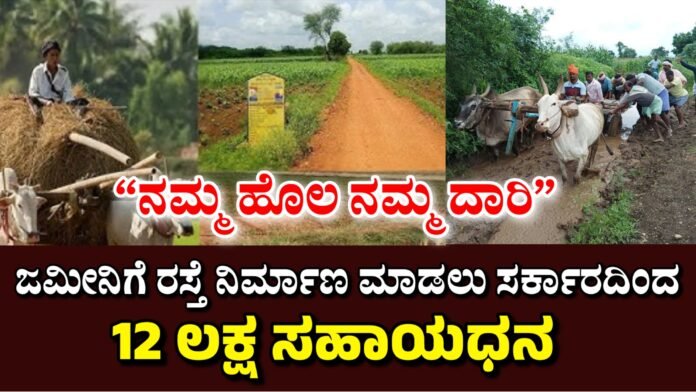
Daari ಜಮೀನಿಗೆ ರಸ್ತೆ ನಿರ್ಮಾಣ ಮಾಡಲು ₹12 ಲಕ್ಷ ಸಹಾಯಧನ

0


“Namma Hola Namma Daari Scheme”: Farmers to Get ₹12 Lakh Rural Road Support – Full Details, Eligibility & Application Guide

For thousands of farmers across Karnataka, owning farmland is not the real struggle — reaching it is. In many villages, agricultural lands remain cut off from proper access roads. Transporting fertilizers, machinery, harvested crops, or even reaching the field during rainy seasons becomes a daily challenge. Understanding these ground realities, the Karnataka government has launched the transformative “Namma Hola Namma Daari” (Our Field, Our Road) Scheme, aimed at building durable and farmer-friendly rural roads.

This initiative is not just another administrative announcement. It is a project that has the potential to transform agricultural productivity, improve the rural economy, and enhance the day-to-day life of farming communities.


Why This Scheme? – Solving a Long-Pending Farmer Problem

Across Karnataka, farmers repeatedly highlighted a common issue:
“We have land, but no proper road to reach it.”

Bad roads or no roads often mean:

  • Higher transportation costs
  • Difficulty in moving tractors and farm machinery
  • Loss of crops during transportation
  • Extra labour charges
  • Delay in marketing produce
  • Struggles during monsoon seasons

The government’s new scheme directly addresses these long-time difficulties by creating all-weather access roads to farmlands.


Funding Pattern – Where Does the ₹12.5 Lakh Come From?

The rural road development under this scheme is funded through the Convergence model, meaning funds from multiple sources are combined.

Breakdown of Funds (Per 1 Km Road):

Funding Source Amount
MGNREGA (Central Govt.) ₹9.00 lakh
Karnataka State Govt. ₹3.50 lakh
Total Project Cost ₹12.50 lakh

This partnership ensures that the government can build long stretches of high-quality rural roads without delays.

Overall Target

  • Roads will be built in 189 rural assembly constituencies
  • Each constituency gets 30 km of new rural roads
  • Total road construction target: 5,670 km

This makes it one of the largest rural connectivity programmes undertaken by the state.


Which Roads Qualify? – Official Eligibility Criteria

Not every farm path can be converted into a government-funded road. The selection is guided by strict rules:

✔ 1. Road must be shown in official village maps

The path should already exist in the Revenue Department’s village map and be marked as:

  • Public Road
  • Footpath
  • Cart Track
  • “Bandi Daari”

Private paths without mapping cannot be approved.

✔ 2. Road must benefit multiple farmers

If a road leads only to one individual’s field, it won’t be considered. Multiple farmers in the region should benefit.

✔ 3. Approval based on MLA’s recommendation

Local MLAs will suggest suitable roads in consultation with:

  • PDO
  • Panchayat officials
  • Village committees

Only after this recommendation will the road be taken up for construction.


What If Private Land is Needed? – Gift Deed Rule Explained

Many rural roads pass through private land. If additional land is required to widen or realign the road, the rules are clear:

✔ No compensation will be paid

The government will not pay for land taken for road construction.

✔ Voluntary land donation only

Landowners must willingly donate the required portion by executing a Registered Gift Deed at the Sub-Registrar Office.

✔ If landowners refuse

The government simply cancels that road and selects an alternative route.

This ensures transparency, avoids disputes, and keeps the project moving without legal hurdles.


Major Benefits for Farmers – Why This Scheme Matters

A proper all-weather agricultural road brings significant long-term advantages.

Sl. No. Benefit
1 Tractors, mini-trucks, pick-up vans can directly reach the farmland
2 Transportation time & cost reduce drastically
3 No more getting stuck in slush during monsoon
4 Employment is created for rural labourers through MGNREGA
5 Faster marketing of crops increases farmers’ income
6 Smooth movement of fertilizers, seeds, and irrigation equipment
7 Improves safety for farmers during night and rainy seasons
8 Enhances overall rural infrastructure and connectivity

Better roads = Better productivity + Better profits + Better quality of life.


How to Get Your Village Road Approved? – Step-by-Step Guide

If your farmland does not have a proper access road, you can actively initiate the process. Farmers must not remain silent — community effort is key.

Step 1: Submit a Written Request to the Panchayat

Gather all nearby farmers who use the same pathway.
Collectively submit a written application to the Panchayat Development Officer (PDO) stating:

“We request road construction under the Namma Hola Namma Daari scheme.”

Multiple signatures strengthen the proposal.


Application Link

Step 2: Raise the Issue in the Gram Sabha

Attend the next Gram Sabha meeting.
Highlight the need for the road.
Gram Sabha approval increases the chances of project sanction.


Step 3: Approach Your MLA

Since the scheme operates under MLA recommendation:

  • Meet your constituency MLA
  • Present your collective request
  • Explain how many farmers benefit
  • Request early approval

Public pressure often accelerates approval.


Step 4: Geo-Tagging is Mandatory

Before, during, and after construction, photos of the road must be:

  • Geo-tagged
  • Uploaded to the government system
  • Verified by officials

This ensures transparency and prevents misuse of funds.


Conclusion – A Golden Opportunity for Rural Farmers

The government has already released the funds. Now, it is up to farmers and local Panchayats to make the best use of this opportunity. A good road can change not just one farm but an entire village’s economy.

If your farmland lacks a proper route, don’t wait. Visit your Panchayat, form a group, and start the application process today.
A simple request today can lead to a lifetime of benefits for the entire farming community.

Home ಹೊಸ ವರ್ಷಕ್ಕೆ ಸರ್ಕಾರದಿಂದ ಉಚಿತ ಮನೆ ಹಂಚಿಕೆ.!

0


Home Rajiv Gandhi Housing Scheme Karnataka 2025: Complete Details, Eligibility & Application Process

Affordable housing remains one of the biggest dreams for thousands of families in Karnataka. To make this dream a reality for economically weaker households, the Government of Karnataka launched the Rajiv Gandhi Housing Scheme, managed by Rajiv Gandhi Housing Corporation Limited (RGHCL). This housing mission aims to provide permanent, safe, and affordable houses to poor families across Karnataka, especially those belonging to rural and socio-economically backward communities.

This article provides a complete 1000-word guide: scheme overview, benefits, eligibility criteria, required documents, online application steps, offline application format, and hashtags.


⭐ What is the Rajiv Gandhi Housing Scheme?

The Rajiv Gandhi Housing Scheme (RGHS) is a subsidised housing program implemented under RGHCL with financial partnership from both the State Government and Central Government. It mainly covers:

  • Basava Vasati Yojana
  • Dr. B.R. Ambedkar Nivas Scheme
  • Ashraya Housing Scheme
  • Chief Minister’s One Lakh Housing Scheme

The major objective is to provide houses to poor, houseless, and landless families by offering construction subsidies, guidance, and monitoring support.


🎯 Main Objectives

  • To support economically weaker families to build their own pucca house
  • To uplift rural and urban poor families
  • To promote women’s empowerment by issuing house ownership in the woman’s name
  • To eradicate homelessness in Karnataka
  • To ensure safe, durable housing with sanitation and electricity

🏠 Key Features & Benefits of the Scheme

✔ 1. Government Subsidy

Beneficiaries receive financial assistance between ₹1.20 lakh to ₹1.75 lakh, depending on the scheme, caste category, and housing type.

✔ 2. Priority to Vulnerable Groups

Special preference is given to:

  • SC / ST families
  • Widows
  • Physically challenged individuals
  • Single women headed households
  • Homeless families

✔ 3. Houses in the Name of Women

Most schemes encourage houses to be registered in the name of women family members, ensuring long-term security.

✔ 4. Transparent Online Selection

Applicants are selected through the online beneficiary management system of RGHCL, ensuring fair, corruption-free allotment.

✔ 5. Assistance for New House Construction

The scheme supports construction of new houses on the beneficiary’s own land.

✔ 6. Technical Guidance

Government engineers assist beneficiaries in planning, estimating material costs, and ensuring safe construction.


📌 Eligibility Criteria

To apply for Rajiv Gandhi Housing Scheme in Karnataka, the applicant must fulfill the following conditions:

  • Must be a permanent resident of Karnataka
  • Must belong to Below Poverty Line (BPL) or economically weaker group
  • Must not own a pucca house either in rural or urban areas
  • Applicant must possess own land (even a small site is enough)
  • Annual income should usually be below ₹32,000 for rural and ₹1,00,000 for urban areas
  • Preference is given to SC/ST, widows, physically challenged, and minority communities

📄 Required Documents

Applicants must submit the following documents while applying:

  1. Aadhar Card
  2. Ration Card (BPL/APL)
  3. Income Certificate
  4. Caste Certificate (if applicable)
  5. Residence Certificate
  6. Land ownership documents (RTC / Pahani / Site deed)
  7. Bank passbook copy
  8. Photograph of applicant
  9. Mobile number
  10. Self-declaration form

🌐 How to Apply Online for Rajiv Gandhi Housing Scheme?

Follow the step-by-step online application process:

Step 1: Visit Official Website

Go to the RGHCL portal:
https://ashraya.karnataka.gov.in (Do not type URL here—just for user guidance)

Step 2: Select Application Type

Choose the scheme you want to apply for:

  • Basava Vasati
  • Ambedkar Housing
  • CM Housing Scheme
  • Rural Housing

Step 3: Create Login

Enter your mobile number → receive OTP → verify your account.

Step 4: Fill Applicant Details

Provide:

  • Name
  • Age
  • Address
  • Aadhaar
  • Caste
  • Annual income

Step 5: Upload Documents

Upload scanned copies of land documents, ID proof, and income certificate.

Step 6: Submit House Construction Details

Provide information such as plot measurement and house type.

Step 7: Final Submission

Click Submit → download acknowledgment slip.

Step 8: Application Verification

Your application will be verified by:

  • Panchayat Development Officer (PDO)
  • Municipal officials
  • RGHCL District Committee

Step 9: Final Selection

Final list will be published on the official portal.


📥 Offline Application Format (Sample)

Below is a simple application format you can submit at Gram Panchayat / Municipal Office.


Application Format for Rajiv Gandhi Housing Scheme

To  
The Panchayat Development Officer / Municipal Officer  
[Village/Town Name]  
[District] – Karnataka  

Subject: Request for Housing Assistance under Rajiv Gandhi Housing Scheme

Respected Sir/Madam,  

I, [Applicant Full Name], residing at [Address], belong to a poor family and do not have a permanent house. I kindly request you to consider my application for a housing unit under the Rajiv Gandhi Housing Scheme.

Applicant Details:
• Name: _________________________  
• Father/Husband Name: __________________  
• Age: __________  
• Category: SC / ST / OBC / Minority / General  
• Aadhaar Number: __________________  
• Ration Card Number: ________________  
• Annual Income: ____________________  
• Land Details (Survey No/Plot No): ______________________  
• Mobile Number: ____________________  

List of Documents Attached:
1. Aadhaar card  
2. Ration card  
3. Income certificate  
4. Caste certificate  
5. Land documents  
6. Passport size photo  

I request you to kindly verify my details and approve my housing assistance.

Thanking you,

Signature: ___________________  
Name: _______________________  
Date: ________________________  

🧱 How Beneficiaries Receive Money?

Housing subsidy is released in 3 installments:

  1. 1st Installment – after site verification
  2. 2nd Installment – after foundation construction
  3. 3rd Installment – after roof completion

Money is directly transferred to the beneficiary’s bank account.


⚠ Important Tips for Applicants

  • Use only your own mobile number during registration
  • Check for Gram Panchayat notice boards for new beneficiary lists
  • Keep all land records updated before applying
  • Upload clear scanned documents to avoid rejection

Application Link

 Conclusion

The Rajiv Gandhi Housing Scheme in Karnataka is a life-changing opportunity for thousands of families who dream of owning a secure, permanent home. With proper eligibility, accurate documentation, and timely application, every poor family can benefit from this government initiative.