Tuesday, November 24, 2026
spot_img
Home Blog Page 97

 UCO ಯೂಕೋ ಬ್ಯಾಂಕ್ ನೇಮಕಾತಿ

0


 UCO Bank Apprentice Recruitment 2025 – Apply Online for 532 Vacancies | Full Details Inside

UCO Bank, one of India’s leading public sector banks, has officially announced a major recruitment drive for Apprentice posts across the country. This recruitment provides an excellent opportunity for fresh graduates who wish to start their career in the banking sector and gain hands-on experience through apprenticeship training.

The official notification was released in October 2025, and applications are now open for 532 apprentice vacancies. Eligible and interested candidates can apply online before the deadline.

Let’s take a detailed look at all the important information — eligibility, selection process, salary, and how to apply.


🔹 Overview of UCO Bank Apprentice Recruitment 2025

Particulars Details
Organization Name UCO Bank
Post Name Apprentice
Total Vacancies 532
Job Type Apprenticeship Training
Location All over India
Application Mode Online
Official Website www.ucobank.com
Last Date to Apply October 30, 2025

🧩 Vacancy Distribution

A total of 532 posts have been announced under this recruitment. The bank will allot vacancies state-wise to ensure equal opportunity for candidates from across India. Selected apprentices will be posted at different UCO Bank branches or offices located in various states and union territories.


🎓 Educational Qualification

To be eligible for the Apprentice post, candidates must have the following qualification:

  • Educational Requirement: A Bachelor’s Degree in any discipline from a recognized university or institution approved by the Government of India or UGC.
  • Language Skills: Candidates should have good communication skills and be proficient in the local language of the state they are applying from.

📅 Age Limit (as of 01 October 2025)

Category Minimum Age Maximum Age
General 20 years 28 years
OBC 20 years 31 years
SC/ST 20 years 33 years
PwBD 20 years 38 years

Note: Candidates must be born between 02.10.1997 and 01.10.2005 (both dates inclusive).


💰 Monthly Stipend

Selected apprentices will receive a monthly stipend of ₹15,000 during the training period. However, no additional benefits like DA, HRA, or other allowances will be provided.

This stipend helps candidates gain professional experience while earning a decent amount during their training tenure.


🧾 Application Fees

Category Application Fee
General / OBC / EWS ₹800
PwBD Candidates ₹400
SC / ST Candidates No Fee

Payment Mode: The fee must be paid online through debit card, credit card, net banking, or UPI. Once paid, the fee will not be refunded under any circumstances.


⚙️ Selection Process

The selection of candidates for UCO Bank Apprentice posts will be done in two major phases:

  1. Online Written Examination
  2. Document Verification

Phase 1 – Online Test

The online examination will consist of objective-type questions covering:

  • General Awareness (especially Banking & Current Affairs)
  • Quantitative Aptitude
  • Reasoning Ability
  • English Language
  • Computer Knowledge

Candidates who score above the cut-off marks will be shortlisted for the next phase.

Phase 2 – Document Verification

Shortlisted candidates must produce all original certificates, including educational qualification, date of birth proof, caste certificate (if applicable), and identity proof. Candidates failing to produce valid documents will be disqualified.


🗓️ Important Dates

Event Date
Application Start Date October 21, 2025
Last Date to Apply October 30, 2025
Last Date for Fee Payment November 5, 2025
Online Examination Date November 9, 2025

🖥️ Step-by-Step Guide to Apply Online

Follow these steps carefully to complete the online application process for UCO Bank Apprentice Recruitment 2025:

Step 1: Read the Official Notification

Before applying, candidates should carefully go through the official notification to understand eligibility, required documents, and other important instructions.

Step 2: Visit the Official Website

Go to www.ucobank.com or click the “Apply Online” link provided on the recruitment section of the website.

Step 3: Fill in the Application Form

Enter all personal and educational details accurately — name, address, phone number, email ID, and qualification details. Double-check all information before submission.

Step 4: Upload Required Documents

Upload scanned copies of your photograph, signature, and any other documents mentioned in the application form.

Step 5: Pay the Application Fee

Pay the required fee as per your category using any of the available online payment methods.

Step 6: Submit and Print Application

Once the form is submitted successfully, download and print the confirmation page or receipt for your records.


🧠 Tips for Candidates

  • Keep a valid email ID and mobile number active till the completion of the recruitment process.
  • Prepare well for the online test by practicing previous banking exam papers.
  • Regularly visit the official UCO Bank website for updates or changes in exam schedule.
  • Candidates selected as apprentices will not be treated as regular bank employees, but successful completion of apprenticeship may add value to future job opportunities.

🔗 Application Link


✍️ Conclusion

The UCO Bank Apprentice Recruitment 2025 is a wonderful opportunity for young graduates who wish to build a foundation in the banking and finance industry. With 532 vacancies across India, this program offers valuable professional training along with a decent stipend.

Don’t miss this chance to begin your banking career! Make sure to apply before October 30, 2025 and start preparing for the upcoming online examination.

Grameena ಪೋಸ್ಟ್ ಆಫೀಸ್‌ನಲ್ಲಿ ₹1500 ಹೂಡಿಕೆ ಮಾಡಿದ್ರೆ 31 ಲಕ್ಷ ಹಣ ಸಿಗುತ್ತೆ.!

0


Grameena:-  Invest ₹1500 Per Month in Post Office & Earn ₹31 Lakhs! – Complete Details of This Profitable Scheme

In today’s world, people are becoming increasingly aware of the importance of securing their financial future. Earlier, banks were the only go-to places for savings and investments. But now, Post Office investment schemes have become equally popular among the general public.

The post office, once known only for delivering letters, is now one of the most trusted institutions for financial transactions and long-term savings. Especially in rural areas where bank branches are limited, post offices play a vital role in offering reliable and accessible investment opportunities.


🏦 Why Is Post Office Investment Considered Safe?

Post Office schemes are government-backed, meaning your money is completely secure. With 100% government guarantee and transparent policies, these schemes attract millions of investors every year.

In addition, post offices offer a wide range of financial services such as:

  • Savings accounts
  • Insurance plans
  • Retirement and pension schemes
  • Monthly income plans
  • Small and medium investment options

Because post offices are available in almost every village in India, they serve as the most accessible investment option for rural citizens.


📈 The “Rural Postal Life Insurance” Scheme – Earn ₹31 Lakhs by Investing ₹1500 Monthly

The Rural Postal Life Insurance (RPLI) scheme is one of the most beneficial programs offered by the Department of Posts. Under this plan, by investing just ₹1500 per month, investors can receive up to ₹31 lakhs at maturity.

It’s a perfect long-term savings plan designed for individuals who wish to build a financially stable future without taking high risks.


👥 Who Can Apply for This Scheme?

Anyone who fulfills the following criteria is eligible:

  • Minimum age: 19 years
  • Maximum age: 55 years
  • Must be an Indian resident
  • Suitable for salaried employees, farmers, and self-employed individuals

📜 Key Highlights of the Scheme

Particular Details
Scheme Name Rural Postal Life Insurance (RPLI)
Monthly Investment ₹1500
Investment Duration Until the age of 55
Maturity Benefit Up to ₹31 Lakhs
Payment Frequency Monthly / Quarterly / Yearly
Loan Facility Available after 3 years
Surrender Option Available after 3 years
Grace Period 30 days for delayed payment

💡 How Does the Investment Grow?

Let’s see how your monthly contribution turns into a large amount over time:

Age at Start Monthly Premium Maturity Amount
19 years ₹1500 ₹31.60 Lakhs
58 years ₹1463 ₹33.40 Lakhs
60 years ₹1411 ₹34.60 Lakhs

If you start investing ₹1500 per month at the age of 19 and continue until 55, you will receive ₹31.60 Lakhs at the end of the term. The amount increases slightly for older entrants because of shorter premium duration and interest calculations.


🌟 Major Benefits of This Scheme

✅ 1. Government-Backed Security

Since the scheme is managed by the Department of Posts, Government of India, your investment is completely safe and risk-free.

✅ 2. Low Monthly Investment

You only need ₹1500 per month to participate — an affordable amount even for middle-class and rural families.

✅ 3. Loan Facility Available

After three years of investment, policyholders can apply for a loan against their policy, which can be useful in financial emergencies.

✅ 4. Tax Benefits

You can claim income tax deductions under Section 80C of the Income Tax Act for the invested amount.

✅ 5. Surrender Option

If you wish to discontinue, you can surrender the policy after completing three years and still receive a portion of the amount invested.

✅ 6. Financial Support After Retirement

Once the policy matures, the maturity amount provides a strong financial backup during old age, ensuring peace of mind and stability.


📝 How to Apply for the Scheme

You can easily apply at any nearby post office branch by following these steps:

  1. Visit your nearest Post Office.
    The scheme is available in both urban and rural post offices across India.
  2. Collect and fill out the application form.
    Provide accurate personal details such as name, date of birth, address, Aadhaar number, etc.
  3. Submit required documents:
    • Aadhaar Card
    • PAN Card
    • Two passport-size photos
    • Bank Passbook
    • Age proof
  4. Select your investment plan.
    You can choose to pay monthly, quarterly, or annually depending on convenience.
  5. Make your first premium payment.
    Once payment is made, you will receive a policy number and official receipt confirming activation.

⚙️ Important Tips for Investors

  • Keep paying your premiums on time to avoid policy lapse.
  • If you miss a payment, you still have a 30-day grace period to complete it.
  • Store all your policy documents safely.
  • Always check for updates or changes in interest rates and benefits at your nearest post office.

💬 Why This Scheme Is Ideal for Common People

For rural and middle-class families, finding a trustworthy investment plan can be difficult. The RPLI scheme offers:

  • High maturity value
  • Guaranteed safety
  • Simple terms
  • No market risk

This makes it a perfect blend of savings and insurance — ensuring financial stability throughout life.


Application Link

 Final Thoughts

Saving money is not just about keeping it aside — it’s about growing it smartly in a secure place. The Post Office’s Rural Postal Life Insurance Scheme gives every individual the power to build a strong financial foundation for themselves and their family.

By investing just ₹1500 per month, you can transform small savings into a large corpus of ₹31 Lakhs, ensuring financial independence in old age.

So, don’t wait! Visit your nearest Post Office today and start investing for a safe and happy future.

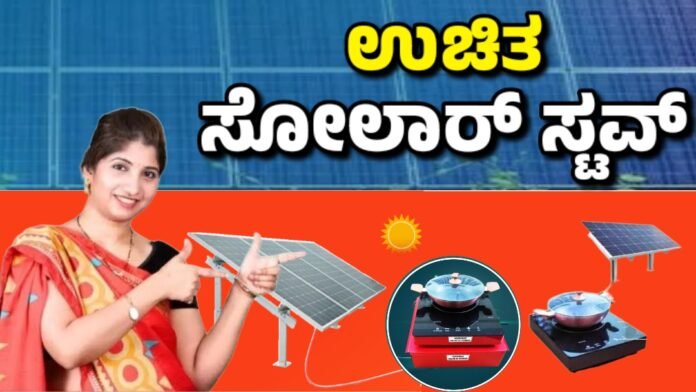
Solar Stove ಉಚಿತ ಸೋಲಾರ್ ಸ್ಟೌವ್ ವಿತರಣೆ.!

0


Government Introduces Solar Stove Scheme – Get ₹5,000 Subsidy for Eco-Friendly Cooking!

In recent years, the rising cost of cooking gas (LPG) has become a major concern for millions of households across India. The steady increase in fuel prices has put a strain on the financial stability of common citizens, especially middle- and lower-income families. To tackle this issue and promote the use of renewable energy, the government has introduced an innovative initiative — the Solar Stove Scheme.

Under this new scheme, citizens can now cook food using solar power instead of relying on expensive LPG cylinders. The Indian Oil Corporation Limited (IOCL) has officially launched solar-powered cooktops that promise to bring down daily cooking expenses while supporting India’s clean energy goals.


🌞 What is the Solar Stove Scheme?

The Solar Stove Scheme is a government-supported initiative that aims to encourage households to switch to solar-based cooking systems. These stoves work entirely on solar energy, helping reduce dependence on traditional LPG gas and electricity.

The Indian Oil Corporation, a state-owned energy company, has developed and launched three advanced models of solar cooktops to suit different family needs and cooking styles. These models include:

Type of Solar Stove Description
Single Burner Solar Cooktop Ideal for small families or bachelors; runs entirely on solar energy.
Double Burner Solar Cooktop Suitable for medium-sized families; both burners use solar energy for efficient cooking.
Double Burner Hybrid Solar Cooktop Can operate using both solar power and electricity — useful during cloudy days.

💰 ₹5,000 Subsidy for Every Household

To make this eco-friendly appliance affordable for all, the government is offering a ₹5,000 direct subsidy under the Solar Stove Scheme.

The total cost of each solar cooktop is around ₹15,000, but after applying the subsidy, consumers will only need to pay ₹10,000. Furthermore, the government plans to allow easy EMI (installment) options so that even low-income families can benefit from this scheme without financial burden.

This subsidy initiative is part of India’s broader mission to reduce carbon emissions and encourage households to shift toward renewable energy-based cooking methods.


🔋 Features and Benefits of Solar Cooktops

Solar stoves are not just environmentally friendly — they are also practical, efficient, and cost-saving. Below are some major benefits of using the new Indian Oil Solar Stove:

  1. Zero Fuel Cost:
    Cooking becomes nearly free after installation because it uses sunlight instead of LPG or electricity.
  2. User-Friendly Design:
    Lightweight and portable, these stoves are easy to use and install in any household.
  3. Hybrid Functionality:
    The hybrid model works with both solar and electric energy, ensuring uninterrupted cooking during rainy or cloudy weather.
  4. Eco-Friendly Solution:
    Solar cooking significantly reduces carbon emissions and indoor air pollution.
  5. Durability:
    Built with high-quality materials, the solar stoves are long-lasting and require minimal maintenance.
  6. Government Subsidy Support:
    With a ₹5,000 subsidy, the upfront cost becomes affordable for all income groups.
  7. Energy Independence:
    Users can reduce dependency on LPG supply chains and fluctuating gas prices.

☀️ Pilot Projects and Public Response

Before its national launch, Indian Oil conducted pilot projects in several states across India to test the performance of these solar cooktops. The response from participants was overwhelmingly positive — users reported excellent cooking performance, quick heating, and significant savings on monthly gas expenses.

Encouraged by these results, the government and Indian Oil Corporation have decided to expand the availability of solar stoves across the country in the next three years, ensuring that every household can benefit from solar cooking.


🏠 Price Details and Purchase Process

Particular Details
Product Name Solar Cooktop / Solar Stove
Company Indian Oil Corporation Limited (IOCL)
Total Price ₹15,000
Government Subsidy ₹5,000
Final Cost to Consumer ₹10,000 (Can be paid in easy installments)
Availability To be announced on the official IOCL website soon

The detailed procedure for applying for this scheme and purchasing the solar stove will be officially announced by the government and Indian Oil in the coming weeks. Citizens will be able to apply online through official portals once the scheme is live.


🌍 Why India Needs Solar Cooking Now

India is one of the largest consumers of LPG in the world, and with fossil fuel prices constantly fluctuating, the cost of cooking has risen dramatically. Adopting solar cooking methods can help the country achieve multiple objectives:

  • Reduce dependence on imported fuel
  • Promote sustainable rural development
  • Empower women with affordable cooking options
  • Support India’s renewable energy targets under the National Solar Mission

In addition, widespread adoption of solar stoves will drastically cut down on carbon emissions and improve indoor air quality, especially in rural and semi-urban areas where traditional fuel use remains high.


📝 How to Apply (Expected Process)

Although the official registration process is yet to begin, the expected steps to apply for the Solar Stove Scheme are as follows:

  1. Visit the official Indian Oil website or government energy portal.
  2. Click on the “Solar Stove Scheme – Apply Now” option.
  3. Fill out the application form with personal and household details.
  4. Upload required documents (Aadhaar card, address proof, bank details).
  5. Submit your form and wait for verification.
  6. Once approved, you will receive a confirmation and subsidy approval message.

After successful verification, eligible applicants can purchase the solar stove from authorized distributors or through official online channels at the subsidized rate.


⚙️ Documents Required (Expected)

Required Document Purpose
Aadhaar Card Identity verification
Address Proof Residential confirmation
Bank Passbook For subsidy transfer
Electricity Bill Verification of household energy status
Passport Size Photo For official record

Application Link

 A Step Toward a Greener Future

The Solar Stove Scheme represents India’s bold step toward energy independence and environmental sustainability. With government support and public participation, this initiative can significantly reduce LPG consumption, cut household expenses, and make India a global leader in renewable energy adoption.

If implemented effectively, the Solar Stove Scheme could become a life-changing project for millions of Indian families — offering clean, cost-effective, and eco-friendly cooking solutions for a better tomorrow.


Subsidy ಹಸು, ಎಮ್ಮೆ ಕೊಟ್ಟಿಗೆ ನಿರ್ಮಾಣಕ್ಕೆ ₹57,000 ಸಬ್ಸಿಡಿ

0

Moo

 ₹57,000 Subsidy for Cow and Ox Shed Construction – A Big Support for Rural Farmers!

In rural India, animal husbandry plays a major role next to agriculture in sustaining farmers’ livelihoods. Many families depend on cows, oxen, sheep, and goats not only for milk and manure but also as a steady source of income. However, without a clean and safe shelter, the health and productivity of these animals often decline.

To address this issue, the government has introduced a financial support scheme — a subsidy of up to ₹57,000 for constructing cattle sheds under the Mahatma Gandhi National Rural Employment Guarantee Act (MGNREGA / NREGA).

This scheme aims to provide both employment and infrastructure development in rural areas, improving the quality of life for farmers and laborers alike.


🌾 Objective and Importance of the Scheme

The main objective of the MGNREGA scheme is to guarantee at least 100 days of paid employment per year to every rural household. But it doesn’t stop at providing jobs — it also aims to improve the overall living conditions of rural citizens by funding useful community and individual works.

Under this program, over 266 types of works can be carried out — including school compounds, playgrounds, toilets, rainwater harvesting pits, ponds, and community halls.

Among these, one of the most beneficial projects for farmers is the Individual Livestock Shed Construction Scheme.
Through this, farmers can get financial support to build sheds for their cows, oxen, goats, or sheep on their own land.


💰 Subsidy Amount for Cattle Shed Construction

The government provides a subsidy of ₹57,000 for the construction of cow and ox sheds.
This amount is distributed in two parts as shown below:

Component Subsidy Amount Description
Labour Payment ₹10,556 Paid wages for workers under NREGA
Material Cost ₹46,644 For building materials and construction

Additionally, subsidies are also available for sheep, goat, pig, and poultry sheds.

A beneficiary can receive up to ₹5 lakh in total during their lifetime for various individual works under the MGNREGA scheme — such as farm ponds, horticulture, fencing, and cattle shed construction.


🧾 Step-by-Step Application Process

To avail of the subsidy for cattle shed construction, farmers must follow these steps:

1. Obtain a Job Card

Having an NREGA job card is mandatory to apply for any work under this scheme.
If you don’t have one yet, visit your Gram Panchayat office and apply for it.

2. Get a Veterinary Officer’s Certificate

You must provide proof that you actually own livestock and need a shed.
Visit your nearest veterinary hospital and obtain a certificate confirming this.

3. Submit Your Application

Take all the required documents and submit the application to your Gram Panchayat for approval.
Officials will conduct a site inspection before sanctioning the project.

4. Start Construction

Once approved, you’ll get permission to start the construction.
Funds are released under the NREGA budget and work begins accordingly.


📂 Required Documents

No. Document Purpose
1 NREGA Job Card Copy Mandatory to avail the scheme
2 Aadhaar Card Identity proof
3 Land Record (Pahani) Ownership verification
4 Bank Account Details For fund transfer
5 Veterinary Officer’s Certificate To prove livestock ownership

🐮 Key Benefits of the Scheme

  • Financial relief for farmers constructing sheds.
  • Clean, safe, and rain-protected environment for livestock.
  • Increase in milk production and overall livestock health.
  • Rural employment opportunities through NREGA funding.
  • Promotes self-sufficiency and sustainable livelihood for farmers.

This initiative not only strengthens the economic condition of small and marginal farmers but also ensures the welfare of animals that support rural families.


🐑 Other Government Schemes for Sheep and Goat Rearing

Along with dairy development, the Government of Karnataka has implemented several schemes to encourage sheep and goat rearing as additional sources of income.

🐏 “Amrutha Swabhimani Kurigahi Yojana”

  • This scheme benefits 10,000 economically weaker members of sheep and wool producer cooperative societies.
  • Each beneficiary receives a 20+1 sheep/goat unit.
  • The total cost of one unit is ₹1,75,000.
  • The cost is shared as follows:
    • 50% loan from NCDC (National Cooperative Development Corporation)
    • 25% subsidy from the State Government
    • 25% contribution by the beneficiary

🌾 Special Unit Scheme for SC/ST Farmers

  • For Scheduled Caste (SC) and Scheduled Tribe (ST) beneficiaries, the Karnataka Sheep and Wool Development Corporation provides 6+1 sheep/goat units.
  • The total cost of one unit is ₹45,000.
  • The government provides 90% subsidy (₹40,500) while the beneficiary needs to pay only ₹4,500.
  • The remaining cost is fully covered by the state government.

⚙️ Important Guidelines for Beneficiaries

  • The cattle shed must be constructed on the farmer’s own land.
  • Work is supervised by local authorities to ensure proper implementation.
  • If misuse of funds is detected, recovery actions will be taken.
  • All project-related details can be obtained from your Gram Panchayat office.

Application Link

✅ Conclusion

The government’s initiative to support livestock shed construction is a major step toward improving farmers’ income and ensuring animal welfare. A simple ₹57,000 subsidy can help a small farmer build a proper shed that changes his entire livelihood.

Healthy animals mean better milk yield, higher profits, and a stronger rural economy.
If you are a farmer raising cattle, sheep, or goats — don’t delay! Visit your Gram Panchayat today and apply for this subsidy.


Anganwadi 627 ಅಂಗನವಾಡಿ ನೇಮಕಾತಿ ಹುದ್ದೆಗಳು SSLC ಪಾಸ್ ಆದವರು ಅರ್ಜಿ ಹಾಕಿ.!

0


 Anganwadi Recruitment 2025: Golden Opportunity for SSLC & PUC Passed Women in Karnataka!

Here’s great news for women across Karnataka! The Department of Women and Child Development (DWCD), Government of Karnataka has announced a massive recruitment drive for Anganwadi Workers and Helpers.
A total of 627 posts are being filled across various districts — making this an excellent opportunity for women seeking secure and meaningful employment in their local areas.


🌸 Objective of the Recruitment

Anganwadi centres are part of India’s Integrated Child Development Services (ICDS) scheme. The main goal of this program is to improve nutrition, health, education, and empowerment among children and women in rural communities.
Hence, working in an Anganwadi is not just a job — it’s a chance to serve society and contribute to nation-building at the grassroots level.


📋 Key Highlights of the Notification

Particular Details
Department Women and Child Development Department (DWCD), Karnataka
Name of Posts Anganwadi Worker, Anganwadi Helper
Total Vacancies 627
Districts Covered Kodagu, Chikkamagaluru, Haveri (Shiggaon Taluk)
Application Mode Online
Official Website dwcd.karnataka.gov.in

🎓 Educational Qualification

  • For Anganwadi Worker: Candidates must have passed PUC (10+2) or SSLC (10th class).
  • For Anganwadi Helper: Candidates must have passed SSLC (10th class).
  • Applicants with additional education or community service experience will be given preference.

🧾 Age Limit & Relaxations

  • Minimum Age: 19 years
  • Maximum Age: 35 years
  • PWD candidates: 10 years relaxation
  • SC/ST/OBC categories: Age relaxation as per government norms

💰 Salary / Honorarium

Though Anganwadi posts are not permanent government jobs, the selected candidates will receive a monthly honorarium as per government norms.
Here’s the approximate pay scale:

Post Monthly Honorarium
Anganwadi Worker ₹10,000 – ₹12,000
Anganwadi Helper ₹6,000 – ₹8,000

🧾 Documents Required

Before applying online, candidates must keep scanned copies of the following documents ready:

  • SSLC/PUC Marks Card (for date of birth proof)
  • Residence Certificate (within 3 years validity)
  • Birth Certificate
  • Caste Certificate (if applicable)
  • Aadhaar Card
  • Passport-size Photograph

🖥️ How to Apply Online

  1. Visit the official website 👉 dwcd.karnataka.gov.in
  2. Open the “Recruitment / Notification” section.
  3. Choose your respective district’s Anganwadi Worker/Helper Application link.
  4. Fill in all details carefully.
  5. Upload all required documents.
  6. Submit your application and take a printout for future reference.

🗓️ Important Dates

District Last Date to Apply
Chikkamagaluru 04-Nov-2025
Kodagu 13-Nov-2025
Haveri (Shiggaon) 17-Nov-2025

📊 District-wise Vacancy Details

District Number of Vacancies
Kodagu 332
Chikkamagaluru 267
Haveri (Shiggaon) 30
Total 627 Posts

🧩 Selection Process

The recruitment will be based on merit and interview performance.
There will be no written examination. Candidates will be shortlisted according to their educational qualifications and local eligibility criteria.


🌈 Benefits of Anganwadi Jobs

  • Opportunity to work within your local area
  • Part of a government-backed social welfare initiative
  • Monthly honorarium ensures stable income
  • Contribute directly to women and child welfare
  • Gain respect and recognition within the community

💡 Helpful Tips for Applicants

  • Double-check your application details before final submission.
  • Ensure all scanned documents are clear and valid.
  • Apply well before the last date to avoid technical issues.
  • Contact your local Anganwadi Office or CDPO for additional guidance.
  • Carry original documents during the interview.

📞 Contact Details

For district-specific queries, candidates can contact the Child Development Project Officer (CDPO) in their respective districts or use the helpline available on the DWCD official website.


✨ Conclusion

Working as an Anganwadi Worker or Helper is more than just a government-supported job — it’s an opportunity to bring positive change in your own community.
Through this recruitment, the Karnataka Government aims to empower rural women, create sustainable livelihoods, and enhance the overall development of mothers and children.

If you’re a woman who wants to contribute to society while earning a steady income, this is your chance to take the first step toward a fulfilling career!


Application Link

🔖 Important Links


Nati ಮಹಿಳೆಯರಿಗೆ 20 ಉಚಿತ ನಾಟಿ ಕೋಳಿ ವಿತರಣೆ

0


Free Nati Kolimari Distribution Scheme for Rural Women – Complete Guide

The Karnataka government has launched a Free Nati Kolimari Distribution Scheme to support rural women. This initiative aims to help women in villages start poultry farming, increase household income, and improve food security.

The scheme primarily focuses on empowering rural women by promoting local/native chicken farming (Nati Kolimari), enhancing rural livelihoods, and encouraging self-help entrepreneurship.


Why the Scheme Matters

Poultry farming is an important source of income for rural households. By participating in this scheme, women can:

  • Increase family income sustainably
  • Support children’s education and healthcare
  • Expand the availability of fresh poultry in local markets
  • Encourage local entrepreneurship and self-reliance

The initiative is implemented by the Animal Husbandry & Veterinary Services Department, which produces chicks in government poultry farms and distributes them to beneficiaries across Karnataka.


Key Features of the Scheme

  • Number of chicks per beneficiary: 20 native chicks
  • Distribution schedule: Chicks are delivered in batches over 5 weeks
  • Objective: Encourage self-help and income generation among rural women
  • Application deadline: Each taluk announces separate deadlines

Eligibility Criteria

Applicants must meet the following requirements:

Eligibility Details
Gender & Age Rural women, 18 years and above
Economic Status Priority given to families below the poverty line (BPL)
Membership Members of self-help groups, primary poultry cooperatives, or farmer producer organizations
Local Residency Must be a resident of the applying taluk/village

Required Documents

To apply, beneficiaries need to submit:

Document Details
Identity Proof Aadhaar Card / Voter ID / Ration Card
Economic Proof BPL certificate or any poverty-related documentation
Membership Proof Self-help group or poultry cooperative membership certificate
Local Residency Proof Taluk or Gram Panchayat certificate

How to Apply

  1. Obtain the application form: From the Animal Husbandry Department or local Gram Panchayat office
  2. Complete the form: Fill in personal details, economic status, and membership information
  3. Attach documents: Submit all required documents along with the form
  4. Submit on time: Deadlines vary by taluk; for example, in Haveri taluk, applications must be submitted by November 10, 5 PM

After submission, officials verify the forms and distribute the chicks to selected beneficiaries.


Step-by-Step Guide for Raising Native Chicks

Once beneficiaries receive the chicks, proper care is crucial for healthy growth:

  1. Brooding: Keep chicks in a warm, dry, and ventilated space for the first 4–6 weeks
  2. Feeding: Provide quality starter feed and clean water daily
  3. Health Check: Vaccinate against common poultry diseases and monitor for signs of illness
  4. Shelter: Provide safe housing with protection from predators and extreme weather
  5. Growth & Egg Production: Native chicks usually start laying eggs at 20–24 weeks

Tips for Profitability

  • Sell eggs and mature chickens locally to generate steady income
  • Join local poultry cooperatives to access better markets
  • Reinvest profits in expanding the poultry business gradually
  • Maintain proper hygiene to reduce disease risk

Additional Government Support

The scheme aligns with other government programs:

  • Amrut Jeevan Scheme & Pashubhagya: Subsidies for livestock and poultry inputs
  • Training & Veterinary Support: Departments provide guidance on chick rearing and disease prevention
  • Credit Facilities: Eligible beneficiaries can apply for low-interest loans for poultry expansion

Success Stories

Many rural women have already benefited from similar initiatives:

  • Example 1: A woman in Haveri taluk started with 20 chicks and now sells 100 eggs daily, supplementing her household income
  • Example 2: In Chitradurga, a self-help group collectively rears 200 chicks, supplying local markets and earning sustainable profits

These examples demonstrate how proper care and government support can transform rural livelihoods.


Frequently Asked Questions (FAQs)

Q1: Can women who already own a few chickens apply?
A1: Yes, but priority is given to women below the poverty line or self-help group members.

Q2: Can male members apply on behalf of women?
A2: The scheme is strictly for rural women; male family members cannot apply.

Q3: Is training provided for beginners?
A3: Yes, the Animal Husbandry Department provides basic training and guidance.


Contact Information

For assistance, applicants can reach district-level officials:

  • Haveri District Assistant Director: 08175-XXXXXX
  • Distribution Location: Local Gram Panchayat Office
  • Application Time: 9:00 AM to 5:00 PM

Application Link

Final Note

The Free Nati Kolimari Distribution Scheme provides a unique opportunity for rural women to improve their livelihoods. By starting native chicken farming, they can earn income, support their families, and contribute to rural economic development. Applicants must submit the required documents and forms before the deadline to avail of this scheme.

Karnataka’s government continues to focus on women’s empowerment, self-reliance, and sustainable poultry farming through initiatives like this.

Surya ಸೋಲಾರ್ ಹಾಕಿಸಲು ಸರ್ಕಾರದಿಂದ 78 ಸಾವಿರ ಸಹಾಯಧನ ಸಿಗಲಿದೆ.!

0


PM Surya Ghar Muft Bijli Yojana 2025 – Get 300 Units of Free Electricity Every Month!

The “PM Surya Ghar Muft Bijli Yojana” launched by the Government of India is one of the most beneficial schemes for middle and lower-income families. The primary goal of this scheme is to reduce the burden of electricity bills on households and promote the use of clean and renewable energy across the country.

Under this scheme, solar panels will be installed on the rooftops of one crore homes. Families will receive up to 300 units of electricity free of cost every month. This initiative not only saves money but also contributes to environmental protection by reducing carbon emissions.


☀️ Main Objectives of the Scheme

Objective Description
💡 Reduce Electricity Bills Households can save up to 90% on their monthly electricity expenses.
🌱 Promote Clean Energy Encourages renewable energy and reduces carbon footprint.
💰 Provide Financial Assistance Government offers direct subsidy for installing solar systems.
🏠 Encourage Self-Reliant Power Generation Families can generate their own electricity independently.

⚡ Key Features of PM Surya Ghar Scheme

  • Up to 300 units of free electricity every month.
  • No electricity bill for 25 years when connected to the grid.
  • No extra land required – panels are installed on rooftops.
  • Very low maintenance cost and long system life.
  • Direct subsidy support from the Central Government.

💸 Subsidy Details 2025

The government provides subsidies depending on the capacity of the solar system installed. Below is the complete breakdown:

Solar System Capacity Subsidy Amount
🔹 1 kW ₹30,000
🔹 2 kW ₹60,000
🔹 3 kW or above ₹78,000 (maximum subsidy)

Example:
A family that installs a 2 kW rooftop solar system will receive a subsidy of ₹60,000 from the government. They can also sell excess electricity generated to the grid and earn additional income.


🧾 Eligibility Criteria

To avail of the benefits of PM Surya Ghar Muft Bijli Yojana, applicants must meet the following conditions:

  • 🇮🇳 Must be an Indian citizen.
  • 🏠 Must own a house with a suitable rooftop for solar installation.
  • ⚡ The house must have a valid electricity connection.
  • ❌ Should not have availed any other solar subsidy earlier.

🪜 Step-by-Step Application Process (Online)

The Central Government has provided a fully online application process for this scheme. Follow these simple steps:

Step 1:

👉 Visit the official website: https://pmsuryaghar.gov.in

Step 2:

📝 Click on the “Registration” button. Select your State, District, Electricity Distribution Company, and enter your Consumer Account Number. Then enter the Captcha Code and click Next.

Step 3:

🔐 After registration, log in using your credentials. Click on “Apply for Rooftop Solar” to submit your application.

Step 4:

📩 Your application will be verified by the local DISCOM/Electricity Board. Eligible applicants will receive the approved subsidy amount in their bank account after installation.


🧰 Required Documents

Document Purpose
🪪 Aadhaar Card Identity proof
📄 Electricity Bill To verify connection details
🏡 House Ownership Proof To confirm the property belongs to the applicant
📷 Rooftop Photo To show suitability for solar installation

🌞 Major Benefits of the Scheme

  • 💰 Save your entire electricity bill every month!
  • 🌎 Use of environment-friendly renewable energy.
  • 🧑‍🔧 Very low maintenance required after installation.
  • 📈 Long-term savings and additional income opportunity.
  • 🔋 Achieve energy independence for your home.

🔋 Technical Highlights

Feature Description
System Lifespan 25 years
Maintenance Cost Very low
Grid Connection Yes (On-Grid System)
Energy Output 4–6 units per kW per day
Excess Energy Sale Possible through Net Metering

🏡 Example of Benefits for a Family

Let’s consider a family installing a 2 kW solar system on their rooftop:

  • Subsidy received: ₹60,000
  • Free electricity: Up to 300 units/month
  • Yearly savings: ₹12,000 – ₹15,000
  • System lifespan: 25 years
  • Total savings: ₹3 lakh or more over time

Thus, within just a few years, the cost of installation is recovered, and families continue to benefit from zero-cost electricity for decades.


🌐 Official Links & Contact Details


Application Link

💬 Conclusion

The PM Surya Ghar Muft Bijli Yojana marks a major step towards India’s clean energy future. It empowers common citizens to generate their own electricity, save thousands annually, and contribute to environmental protection.

If you have a rooftop, don’t miss this opportunity — turn your home into a mini power station and enjoy free electricity for life! 🌞

APL ಮತ್ತು BPL ಹೊಸ ರೇಷನ್ ಕಾರ್ಡ್ ಗೆ ಅರ್ಜಿ ಸಲ್ಲಿಕೆ ಆರಂಭ.!

0

 APL & BPL Ration Card Application Process Starts Again in Karnataka – Here’s How to Apply!

The Government of Karnataka has once again opened the application process for new APL (Above Poverty Line) and BPL (Below Poverty Line) ration cards. Eligible residents of the state can now apply for these cards based on their annual income, residence status, and family details.

The ration card is not just a document for purchasing food grains — it is also a gateway to access several welfare schemes and benefits provided by the government. Hence, it’s very important for every eligible family to apply for a new card by following the correct process and submitting valid documents.


🔹 Importance of a Ration Card

A ration card serves as one of the most essential identity documents for residents of Karnataka. It provides multiple benefits, such as:

  • Access to subsidized food grains like rice, wheat, sugar, and kerosene through the Public Distribution System (PDS).
  • Eligibility to avail various government schemes, including Anna Bhagya, Pradhan Mantri Ujjwala Yojana, and other welfare programs.
  • Acts as a proof of identity and residence for availing education, healthcare, or banking services.

Thus, having a valid ration card ensures food security as well as easy access to numerous welfare initiatives.


🔹 Difference Between APL and BPL Cards

Card Type Target Group Income Criteria Key Benefits
APL (Above Poverty Line) Economically stable families Income above the government’s poverty line limit Limited subsidy on food and essentials
BPL (Below Poverty Line) Economically weaker families Income below the government-specified limit Higher subsidy, free grain distribution, and full eligibility for government welfare programs

🔹 Eligibility Criteria

To apply for a new APL or BPL ration card in Karnataka, the applicant must fulfill the following conditions:

  1. Residency – The applicant must be a permanent resident of Karnataka.
  2. Income Criteria –
    • For BPL Card: The total annual family income must be below the government-specified limit.
    • For APL Card: There is no fixed limit, but it is generally for families above the poverty line.
  3. Old Card Status – If you already possess an old ration card, it must be canceled before applying for a new one.
  4. Family Details – Accurate and complete information of all family members must be provided.

🔹 List of Mandatory Documents

Applicants must submit the following documents along with the ration card application form:

  • Aadhaar card copies of all family members
  • Income certificate issued by the Tahsildar office
  • Caste certificate (if applicable)
  • Proof of residence – Electricity bill, gas bill, or rental agreement
  • Birth certificate for children below 6 years
  • Active mobile number (for OTP verification and application tracking)
  • Passport-size photograph of the head of the family

All documents should be scanned clearly before uploading online or submitting at the offline center.


🔹 How to Apply for a New Ration Card

The Karnataka government has made the process simple and accessible in both online and offline modes.

🖥️ Online Application Method

  1. Visit the official website of the Food and Civil Supplies Department: ahara.kar.nic.in
  2. Click on the option “New Ration Card Application.”
  3. Register using your Aadhaar or OTP verification.
  4. Fill in all family details, address, and income information accurately.
  5. Upload scanned copies of all required documents.
  6. Review your application and click on “Submit.”
  7. Save the Acknowledgement Number — this will be required to track your application status later.

🏢 Offline Application Method

  1. Visit your nearest Gram Panchayat Office, Tahsildar Office, or Food Department District Office.
  2. Collect the Ration Card Application Form from the officials.
  3. Fill it carefully with accurate details.
  4. Attach copies of all necessary documents.
  5. Submit the form to the concerned officer for verification.
  6. Once verified, your new ration card will be processed and issued within a few weeks.

🔹 How to Check Application Status

You can easily track the status of your ration card application online:

  • Go to ahara.kar.nic.in
  • Click on “Application Status”
  • Enter your Acknowledgement Number
  • You’ll be able to see whether your application is approved, pending, or rejected, along with remarks from the department.

🔹 Warning: Avoid Submitting Fake Documents

In the past, several people attempted to obtain BPL cards using fake or forged documents. The Food Department has canceled such cards and even taken legal action in many cases.

Hence, applicants must ensure that:

  • All documents are authentic and transparent.
  • False information will result in cancellation and penalty.
  • Only genuine and eligible families will receive benefits under the new ration card drive.

🔹 Helpline and Support

If you face any confusion, technical issue, or document-related problem, contact the Food Department directly:

📞 Toll-Free Helpline: 1800-425-9339
🌐 Official Website: ahara.kar.nic.in
🏢 Helpdesk: District Food Controller Office or Taluk Food Office


🔹 Major Benefits of a Ration Card

Having a valid ration card provides several advantages:

  • Subsidized supply of essential commodities (rice, wheat, sugar, kerosene)
  • Free LPG connection under PM Ujjwala Yojana
  • Eligibility for government welfare programs like Jan Dhan Yojana, PM Awas Yojana, and Health Schemes
  • Serves as valid proof for residence, ID verification, and government documentation
  • Access to education scholarships and medical benefits

🔹 Key Details at a Glance

Particular Details
Department Food, Civil Supplies, and Consumer Affairs Department
Scheme Name New APL & BPL Ration Card Registration
Application Mode Online & Offline
Official Website ahara.kar.nic.in
Helpline Number 1800-425-9339
Required Documents Aadhaar, Income Certificate, Address Proof, Caste Certificate, Photo, Birth Certificate

Application Link

🟢 Final Words

A ration card is not just a food distribution document — it’s a symbol of security and welfare for every household. With the Karnataka government reopening the registration process, residents now have an easy opportunity to apply for their new APL or BPL card without any difficulty.

Make sure to keep your documents ready, fill the form carefully, and submit it through the official website or nearest office. Once approved, you can enjoy a range of benefits under the state’s welfare programs.

👉 Apply today and ensure that your family continues to receive all the essential subsidies and government support you are entitled to!

Pension ಕಾರ್ಮಿಕರಿಗೆ ತಿಂಗಳಿಗೆ 3000 ರೂ. ಪಿಂಚಣಿ ಸಿಗುತ್ತೆ.!

0


💼 Pradhan Mantri Shram Yogi Maandhan Yojana 2025 – Get ₹3,000 Monthly Pension for Workers

India is a nation with a large population where millions of people earn their livelihood through daily wage work, small businesses, and unorganized sector jobs. To provide financial security to such workers, especially in their old age, the Central Government has launched a special social security pension scheme known as Pradhan Mantri Shram Yogi Maandhan Yojana (PM-SYM).

Under this scheme, eligible unorganized sector workers can receive a monthly pension of ₹3,000 after the age of 60. Both the worker and the government contribute equally to this pension fund, making it a secure and beneficial investment for the future.


🧾 Objective of the Scheme

The main goal of the Pradhan Mantri Shram Yogi Maandhan Yojana is to provide financial security during old age to workers from the unorganized sector.

Most workers depend solely on their daily income for survival. However, once they grow older, their ability to work declines, leading to loss of income. To prevent such hardship, this pension acts as a lifelong financial support system for them.


👨‍🏭 Who is Eligible?

To benefit from the Pradhan Mantri Shram Yogi Maandhan Yojana, applicants must meet the following eligibility criteria:

Eligibility Criteria Details
Age Limit Between 18 to 40 years
Income Limit Monthly income below ₹15,000
Sector Unorganized sector workers only
Tax Payer Income tax payers are not eligible
Other Schemes Not a member of EPFO, ESIC, or NPS
Required Documents Aadhaar card, Bank account, Mobile number

💸 Monthly Contribution Details

Workers need to deposit a small monthly contribution to join the scheme. The amount depends on the worker’s age at the time of joining. The Government contributes the same amount as the worker to the pension fund.

Age of Worker Monthly Contribution Government’s Contribution
18 years ₹55 ₹55
25 years ₹80 ₹80
35 years ₹150 ₹150
40 years ₹200 ₹200

After turning 60 years old, the beneficiary receives a ₹3,000 monthly pension, i.e., ₹36,000 annually.


💰 Major Benefits of the Scheme

  • ✅ Monthly pension of ₹3,000 after 60 years of age.
  • ✅ Equal contribution by the government.
  • ✅ Pension is directly credited to the bank account.
  • ✅ In case of the beneficiary’s death, the spouse receives 50% family pension.
  • ✅ Fully government-backed pension fund — zero investment risk.
  • ✅ Simple online enrollment through Aadhaar-based registration.

📋 How to Apply for PM-SYM Scheme?

You can apply both online and offline under this pension scheme.

🔹 Online Method:

  1. Visit the official website: https://maandhan.in
  2. Select “Pradhan Mantri Shram Yogi Maandhan Yojana.”
  3. Click on “Self Enrollment.”
  4. Enter your Aadhaar number and bank details.
  5. Verify OTP on your registered mobile number.
  6. Choose your contribution amount and complete the registration.

🔹 Offline Method:

  1. Visit your nearest Common Service Centre (CSC).
  2. Submit documents like Aadhaar, bank passbook, and a passport-size photo.
  3. CSC operator will complete your registration process.
  4. You will receive a unique pension ID and acknowledgment slip instantly.

📑 Required Documents

Document Purpose
Aadhaar Card Identity verification
Bank Passbook Pension money transfer
Mobile Number OTP verification and updates
Photograph Registration proof

🕐 When Does the Pension Start?

Once you start making regular monthly contributions, you will become eligible to receive a pension of ₹3,000 per month after you turn 60 years old.
The pension amount will be directly credited to your bank account every month, ensuring a consistent income during retirement.


⚖️ Family Pension Benefits

If the pensioner passes away, their spouse becomes eligible for a 50% family pension, amounting to ₹1,500 per month.
This feature ensures that the family continues to receive financial support even after the worker’s demise.


🌟 Key Features of PM-SYM

  • 🌿 Long-term saving and retirement protection.
  • 📲 Aadhaar-based digital registration system.
  • 💬 Free registration through CSC centers.
  • 🧾 Transparent and simple process with no paperwork hassles.
  • 🔒 100% Government of India guaranteed scheme.

🔔 Important Tips

  • Ensure your bank account is linked with Aadhaar before applying.
  • Always pay your monthly contribution on time to avoid lapse.
  • Apply only through the official website or authorized CSC centers — avoid fake links.

🔍 Quick Overview

Feature Details
Scheme Name Pradhan Mantri Shram Yogi Maandhan Yojana
Benefit ₹3,000 Monthly Pension
Eligible Age 18–40 years
Pension Starts From 60 years of age
Contribution ₹55 to ₹200 (based on age)
Application Mode Online / Offline (CSC Centers)
Official Website www.maandhan.in

Application Link

💬 Final Words

The Pradhan Mantri Shram Yogi Maandhan Yojana is a revolutionary pension scheme designed for India’s unorganized sector workers. It aims to provide financial protection during old age, ensuring that no worker has to struggle without income after retirement.

If you belong to the unorganized sector — such as daily wage laborers, domestic workers, drivers, tailors, vendors, or small artisans — this is your opportunity to secure your future. Apply today and take the first step toward a stress-free retirement!


LIC Kanyadan Policy ಕೇವಲ ₹121 ಕಟ್ಟಿ, ₹27 ಲಕ್ಷ ಹಣ ಸಿಗುತ್ತೆ.!

0


LIC Kanyadan Policy – Secure Your Daughter’s Future with Just ₹121 a Day!

In today’s world, where education and financial independence have become essential, every parent dreams of giving their daughter the best possible start in life. Whether it’s for higher education or marriage, planning ahead can make a huge difference. To support this noble cause, the Life Insurance Corporation of India (LIC) has introduced a special financial plan called the LIC Kanyadan Policy — designed exclusively for the secure future of daughters across India.

This plan allows parents to create a strong financial foundation for their daughter’s future by investing a small amount regularly. Believe it or not, with just ₹121 per day, you can build a fund of up to ₹27 lakhs for your daughter’s education and marriage expenses.


🌸 Why LIC Kanyadan Policy?

The Kanyadan Policy is not just an insurance plan; it’s an emotional investment for every loving parent. The purpose behind this scheme is to financially empower families to plan their daughters’ futures without stress. It encourages early savings and long-term planning so that when your daughter reaches adulthood, money should never be an obstacle to her dreams.

Today, girls are excelling in every field—science, sports, business, and leadership. They are no longer behind anyone, and their success deserves strong financial backing. The LIC Kanyadan Policy is one of the best ways to ensure that.


💡 Key Highlights of the LIC Kanyadan Policy

Feature Details
Plan Type Endowment-based savings plan for daughters
Eligibility Father’s age must be below 50 years; daughter should be at least 1 year old
Premium Amount ₹3,600 per month (around ₹121 per day)
Policy Term 13 to 25 years (flexible)
Maturity Benefit Up to ₹27 lakhs
Minimum Sum Assured ₹1 lakh
Maximum Sum Assured ₹27 lakhs
Lock-in Period Applicable until maturity (depends on term selected)
Premium Waiver In case of the father’s unfortunate demise during the policy term, all future premiums are waived, but benefits continue.

🎯 How the Policy Works

When you invest in this policy, you pay a small premium—roughly ₹121 per day—for a fixed number of years (typically up to 22 or 25 years). Once the policy term ends, LIC pays out a lump sum maturity amount to your daughter. This can be used for her higher education, business startup, or marriage expenses.

Here’s an example:

  • If a father starts the policy when his daughter is 1 year old,
  • and pays ₹3,600 per month (₹121/day) until she turns 23,
  • then upon maturity, she will receive around ₹27 lakhs.

That’s a significant amount — built slowly and steadily through consistent savings.


👨‍👩‍👧 Eligibility and Conditions

To enroll in this policy:

  1. The father’s age must be below 50 years.
  2. The daughter should be at least one year old.
  3. The policy term can be selected based on the age of the child — between 13 to 25 years.
  4. The premium amount can vary depending on the sum assured chosen.
  5. The father is the policyholder, and the daughter is the beneficiary.

💰 Benefits of the LIC Kanyadan Policy

1️⃣ Financial Security for Your Daughter

The biggest advantage is peace of mind. Even if something unexpected happens to the parent, the policy ensures that the daughter’s financial goals are never affected.

2️⃣ Premium Waiver in Case of Death

If the father (policyholder) passes away during the term, LIC waives all remaining premiums but continues the policy. The maturity benefit will still be paid to the daughter as planned.

3️⃣ Tax Benefits

All premiums paid under this plan are eligible for tax deductions under Section 80C of the Income Tax Act. The maturity benefits are also tax-free under Section 10(10D).

4️⃣ Long-Term Wealth Creation

Consistent small investments over the years lead to a large payout at maturity. This promotes disciplined saving habits.

5️⃣ Education and Marriage Support

When the policy matures, parents get a large amount that can cover their daughter’s higher education, marriage expenses, or even help her start a new business.

6️⃣ Flexible and Reliable

You can select the policy term that suits your financial situation. LIC’s reputation and strong track record make this policy one of the most trusted investment options in India.


📈 Example of Returns

Yearly Premium Total Payment Period Total Paid Approx. Maturity Value
₹43,200 per year 22 years ₹9,50,400 ₹27,00,000 (approx.)

So, with less than ₹10 lakh investment over two decades, you can build a corpus of around ₹27 lakhs.


🧾 Documents Required

To apply for the LIC Kanyadan Policy, you will need:

  • Identity proof (Aadhaar Card, PAN Card)
  • Age proof of father and daughter
  • Address proof
  • Birth certificate of the daughter
  • Passport-size photographs

🖋️ How to Apply

You can apply for the LIC Kanyadan Policy in two simple ways:

  1. Offline: Visit your nearest LIC branch and meet an authorized LIC agent. They will help you choose the best plan term and premium structure.
  2. Online: Visit the official LIC website (www.licindia.in) and explore the “Child Plans” section. From there, you can calculate premiums and apply online.

🌺 Why Every Parent Should Consider This Plan

Parenthood is filled with responsibilities, and securing your child’s future is the most important one. The LIC Kanyadan Policy is more than just a financial plan — it’s a promise. It ensures that your daughter will always have the means to fulfill her dreams, even if you’re not around.

The small step of saving ₹121 a day can make a lifetime of difference for your daughter’s happiness and security. With rising education costs and wedding expenses, such foresight can make you a financially smart parent and give your daughter the freedom to live confidently.


Application Link

 Final Thoughts

In a country where daughters are seen as “Lakshmi” — symbols of prosperity — the LIC Kanyadan Policy is a modern way to celebrate that belief. It’s a blend of love, responsibility, and financial wisdom. By starting early, parents can create a strong foundation for their child’s bright and independent future.

So, don’t wait for the right time — make the right time today!
Start investing in your daughter’s dreams and secure her tomorrow with the LIC Kanyadan Policy.