


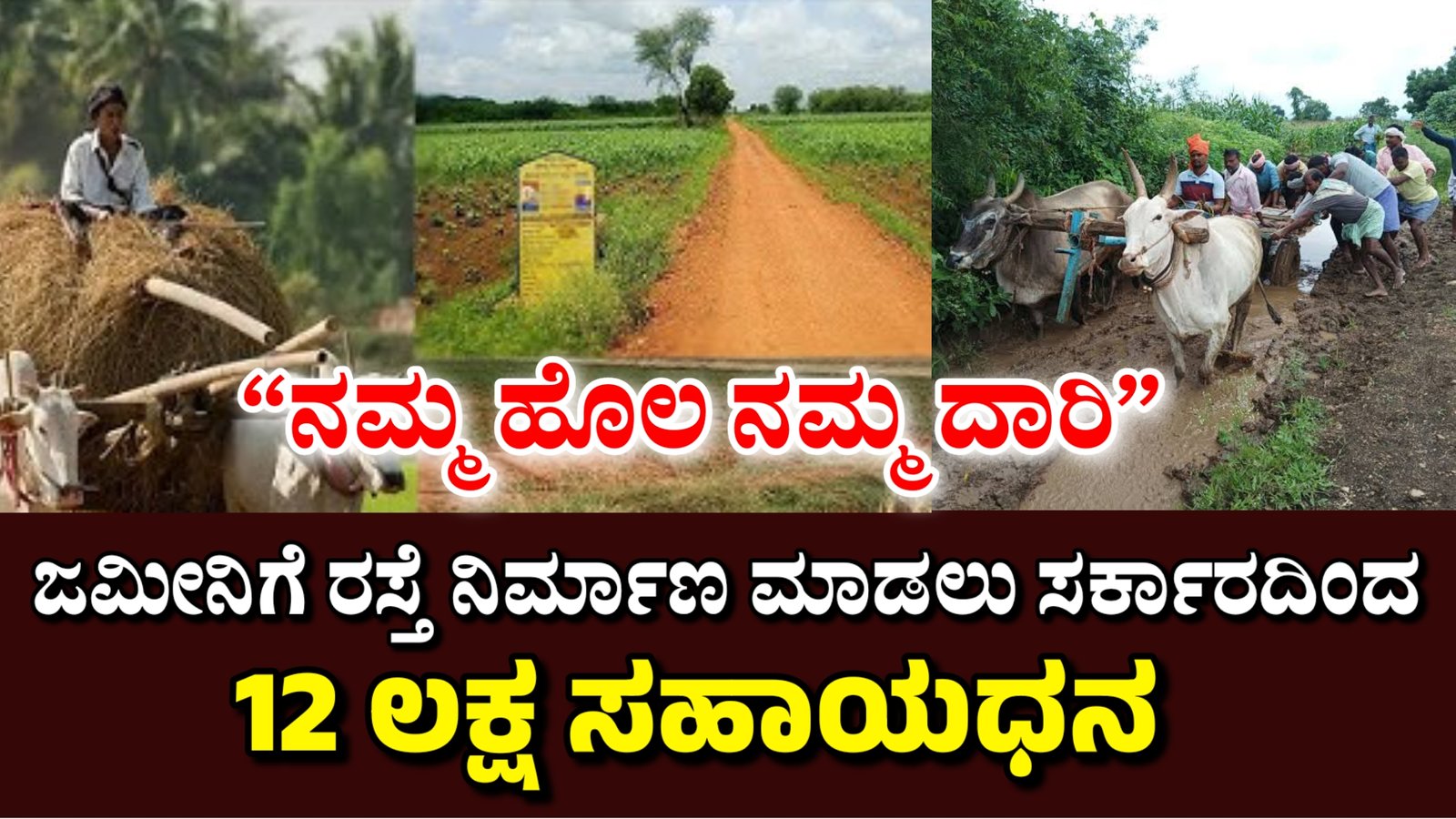
“Namma Hola Namma Daari Scheme”: Farmers to Get ₹12 Lakh Rural Road Support – Full Details, Eligibility & Application Guide
For thousands of farmers across Karnataka, owning farmland is not the real struggle — reaching it is. In many villages, agricultural lands remain cut off from proper access roads. Transporting fertilizers, machinery, harvested crops, or even reaching the field during rainy seasons becomes a daily challenge. Understanding these ground realities, the Karnataka government has launched the transformative “Namma Hola Namma Daari” (Our Field, Our Road) Scheme, aimed at building durable and farmer-friendly rural roads.
This initiative is not just another administrative announcement. It is a project that has the potential to transform agricultural productivity, improve the rural economy, and enhance the day-to-day life of farming communities.
Why This Scheme? – Solving a Long-Pending Farmer Problem
Across Karnataka, farmers repeatedly highlighted a common issue:
“We have land, but no proper road to reach it.”
Bad roads or no roads often mean:
- Higher transportation costs
- Difficulty in moving tractors and farm machinery
- Loss of crops during transportation
- Extra labour charges
- Delay in marketing produce
- Struggles during monsoon seasons
The government’s new scheme directly addresses these long-time difficulties by creating all-weather access roads to farmlands.
Funding Pattern – Where Does the ₹12.5 Lakh Come From?
The rural road development under this scheme is funded through the Convergence model, meaning funds from multiple sources are combined.
Breakdown of Funds (Per 1 Km Road):
| Funding Source | Amount |
|---|---|
| MGNREGA (Central Govt.) | ₹9.00 lakh |
| Karnataka State Govt. | ₹3.50 lakh |
| Total Project Cost | ₹12.50 lakh |
This partnership ensures that the government can build long stretches of high-quality rural roads without delays.
Overall Target
- Roads will be built in 189 rural assembly constituencies
- Each constituency gets 30 km of new rural roads
- Total road construction target: 5,670 km
This makes it one of the largest rural connectivity programmes undertaken by the state.
Which Roads Qualify? – Official Eligibility Criteria
Not every farm path can be converted into a government-funded road. The selection is guided by strict rules:
✔ 1. Road must be shown in official village maps
The path should already exist in the Revenue Department’s village map and be marked as:
- Public Road
- Footpath
- Cart Track
- “Bandi Daari”
Private paths without mapping cannot be approved.
✔ 2. Road must benefit multiple farmers
If a road leads only to one individual’s field, it won’t be considered. Multiple farmers in the region should benefit.
✔ 3. Approval based on MLA’s recommendation
Local MLAs will suggest suitable roads in consultation with:
- PDO
- Panchayat officials
- Village committees
Only after this recommendation will the road be taken up for construction.
What If Private Land is Needed? – Gift Deed Rule Explained
Many rural roads pass through private land. If additional land is required to widen or realign the road, the rules are clear:
✔ No compensation will be paid
The government will not pay for land taken for road construction.
✔ Voluntary land donation only
Landowners must willingly donate the required portion by executing a Registered Gift Deed at the Sub-Registrar Office.
✔ If landowners refuse
The government simply cancels that road and selects an alternative route.
This ensures transparency, avoids disputes, and keeps the project moving without legal hurdles.
Major Benefits for Farmers – Why This Scheme Matters
A proper all-weather agricultural road brings significant long-term advantages.
| Sl. No. | Benefit |
|---|---|
| 1 | Tractors, mini-trucks, pick-up vans can directly reach the farmland |
| 2 | Transportation time & cost reduce drastically |
| 3 | No more getting stuck in slush during monsoon |
| 4 | Employment is created for rural labourers through MGNREGA |
| 5 | Faster marketing of crops increases farmers’ income |
| 6 | Smooth movement of fertilizers, seeds, and irrigation equipment |
| 7 | Improves safety for farmers during night and rainy seasons |
| 8 | Enhances overall rural infrastructure and connectivity |
Better roads = Better productivity + Better profits + Better quality of life.
How to Get Your Village Road Approved? – Step-by-Step Guide
If your farmland does not have a proper access road, you can actively initiate the process. Farmers must not remain silent — community effort is key.
Step 1: Submit a Written Request to the Panchayat
Gather all nearby farmers who use the same pathway.
Collectively submit a written application to the Panchayat Development Officer (PDO) stating:
“We request road construction under the Namma Hola Namma Daari scheme.”
Multiple signatures strengthen the proposal.
Application Link
Step 2: Raise the Issue in the Gram Sabha
Attend the next Gram Sabha meeting.
Highlight the need for the road.
Gram Sabha approval increases the chances of project sanction.
Step 3: Approach Your MLA
Since the scheme operates under MLA recommendation:
- Meet your constituency MLA
- Present your collective request
- Explain how many farmers benefit
- Request early approval
Public pressure often accelerates approval.
Step 4: Geo-Tagging is Mandatory
Before, during, and after construction, photos of the road must be:
- Geo-tagged
- Uploaded to the government system
- Verified by officials
This ensures transparency and prevents misuse of funds.
Conclusion – A Golden Opportunity for Rural Farmers
The government has already released the funds. Now, it is up to farmers and local Panchayats to make the best use of this opportunity. A good road can change not just one farm but an entire village’s economy.
If your farmland lacks a proper route, don’t wait. Visit your Panchayat, form a group, and start the application process today.
A simple request today can lead to a lifetime of benefits for the entire farming community.

