


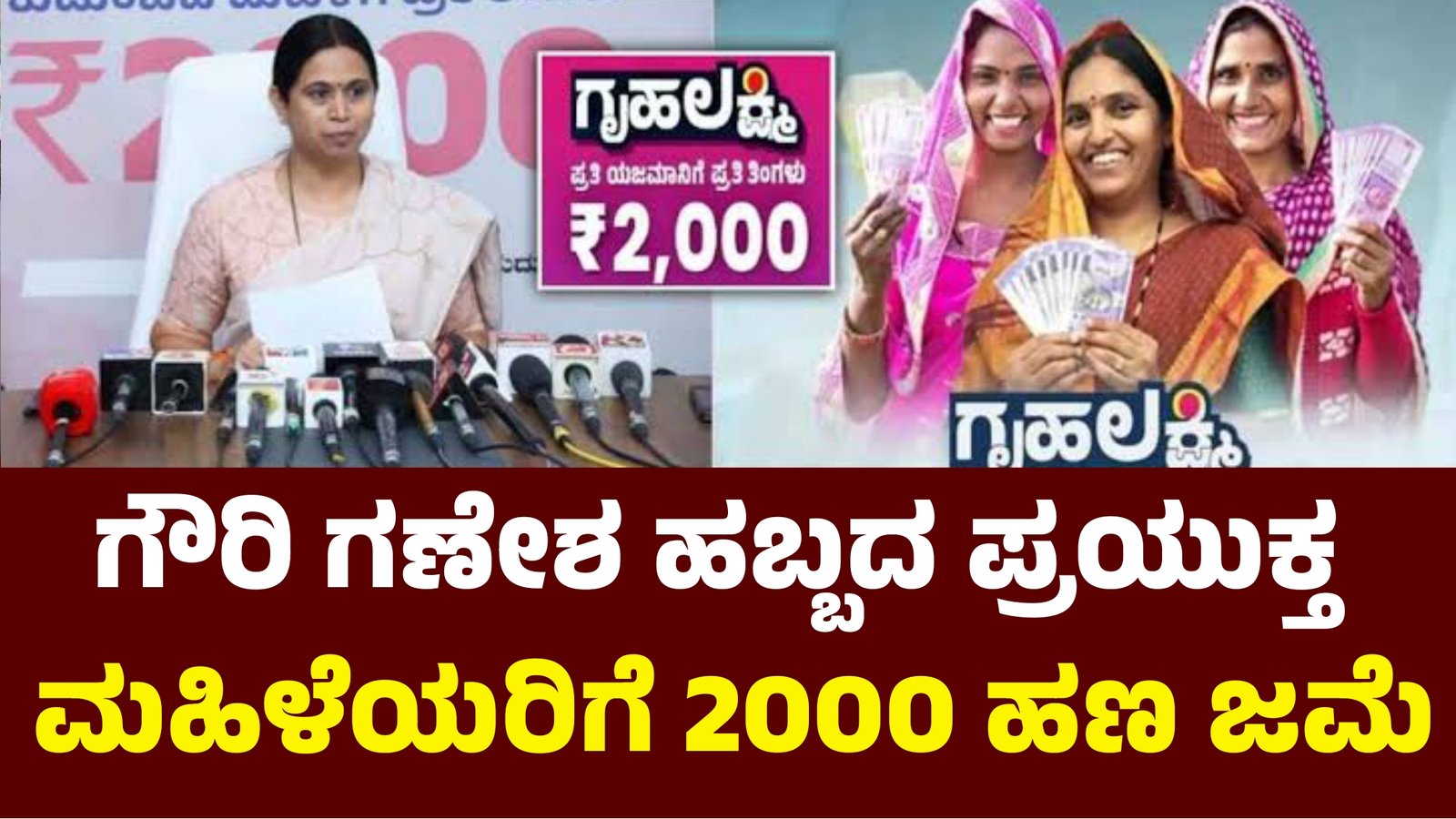
Gruhalakshmi Scheme: ₹2000 Assistance Transferred to Women’s Bank Accounts – Check Status Online
The Gruhalakshmi Scheme has emerged as one of the most impactful welfare programs introduced by the Government of Karnataka. Aimed at empowering women and supporting families belonging to the Below Poverty Line (BPL) and economically weaker sections, this scheme provides ₹2000 per month directly to eligible women through Direct Benefit Transfer (DBT).
Recently, the Women and Child Welfare Department has confirmed that the next round of payments has been successfully credited to the bank accounts of beneficiaries across all districts. If you are a registered beneficiary, you can now check whether the amount has been deposited using simple online and mobile methods.
This article will provide you with:
- An overview of the Gruhalakshmi scheme
- Payment release dates and installment details for 2025
- Total amount released till date
- Methods to check payment status on mobile
- Official resources for further assistance
What is the Gruhalakshmi Scheme?
The Gruhalakshmi Scheme was launched after the Congress Government came to power in Karnataka. The initiative focuses on reducing the financial burden of poor and lower-middle-class households by providing monthly financial assistance of ₹2000 to women who hold a BPL card or belong to eligible categories as per state government rules.
The scheme not only supports household needs but also plays a significant role in strengthening women’s financial independence and decision-making power.
Gruhalakshmi Payments Released in 2025
In the financial year 2025–26, the government has already credited three rounds of payments to beneficiaries. The transfer was carried out in phases across different districts to ensure smooth disbursement.
Here are the confirmed dates of payment installments for this year:
| Installment | Date of Transfer | Amount Credited |
|---|---|---|
| First Installment | 19 May 2025 | ₹2000 |
| Second Installment | 09 June 2025 | ₹2000 |
| Third Installment | 14 August 2025 | ₹2000 |
So far, three installments have been released, ensuring consistent financial aid to lakhs of families across the state.
How Much Has Each Beneficiary Received Till Now?
Since the inception of the scheme, every eligible woman has been credited with a substantial cumulative amount. By August 2025, many beneficiaries have already received over ₹46,000 directly in their bank accounts through DBT.
This clearly shows the long-term commitment of the state government to uplift women economically. The monthly transfer acts as a stable income support for families struggling with rising living costs.
How to Check Gruhalakshmi Scheme Payment Status Online
Gone are the days when women had to visit banks repeatedly to confirm whether government benefits were credited. Now, the Karnataka government has made it easier by introducing digital and mobile-friendly methods.
Here are the two most reliable ways to check the status of your Gruhalakshmi payments:
Method 1: Using Bank Balance Check Helpline Numbers
Most banks in India provide a missed call banking service. Through this, customers can check their account balance instantly.
- Dial your bank’s balance enquiry number from the mobile number registered with your bank account.
- You will receive an SMS with details of your available balance.
- If Gruhalakshmi funds have been deposited, you will see an updated balance reflecting the transfer.
👉 This method is quick, free of cost, and works even without internet access.
Method 2: Using DBT Karnataka Mobile Application
The e-Governance Department of Karnataka has developed the DBT Karnataka app to make it easier for citizens to track welfare benefits.
Steps to Check Payment Status on DBT Karnataka App:
- Download the DBT Karnataka App from the Google Play Store.
- Open the app and enter your 12-digit Aadhaar number.
- Click on Get OTP and enter the OTP received on your registered mobile number.
- Create a 4-digit password for security and log in.
- On the home screen, select Payment Status.
- Under the Gruhalakshmi scheme option, you will see:
- Number of installments received
- Amount credited
- Date of transaction
- Bank account details (last 4 digits)
- UTR/transaction reference number
This method provides a complete record of all your past and present payments.
Why the Gruhalakshmi Scheme Matters
The cost of living has been steadily increasing, especially for poor households. Many families depend on women as financial managers of the household. By depositing money directly into the bank accounts of women, the government ensures:
- Direct financial independence for women
- Reduced poverty levels in rural and urban poor households
- Increased household security in terms of food, health, and education
- Women’s empowerment, as they gain more say in family expenses
The scheme also boosts digital literacy among rural women as they increasingly use mobile apps and banking services to track funds.
Future of Gruhalakshmi Scheme
The government has hinted at plans to strengthen the scheme further by introducing better digital tracking systems, expanding eligibility to more households, and ensuring that 100% of transfers are completed without delays.
Additionally, awareness campaigns are being run in rural areas to ensure that no eligible woman is left out.
Official Resources for Beneficiaries
- Official Website: DBT Karnataka Portal
- Mobile Application: DBT Karnataka (available on Play Store)
- Bank Helpline Numbers: Available on the websites of respective banks
If you face any issues regarding payment not being credited, you may approach your nearest Gram Panchayat, Taluk Office, or the Women and Child Welfare Department.
Status Check
Conclusion
The Gruhalakshmi Scheme is a lifeline for lakhs of women across Karnataka. With monthly financial support of ₹2000, the scheme has not only improved household income but also enhanced women’s dignity and independence.
If you are a beneficiary, make sure to check your account status regularly through mobile banking or the DBT Karnataka app to stay updated on your payments.
This program is a shining example of how direct benefit transfers (DBT) can empower citizens and reduce financial leakages in welfare schemes.

