


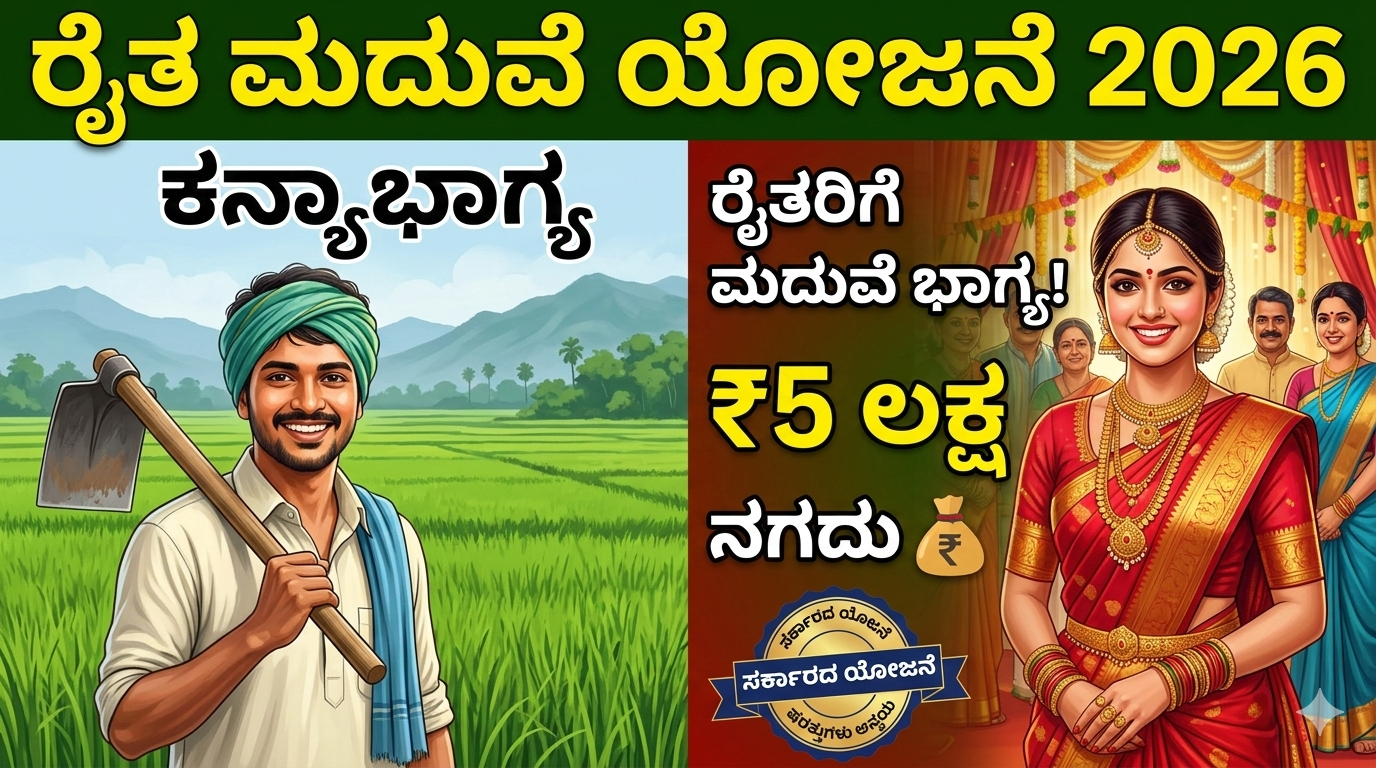
Farmer Marry Scheme 2026: A Bold Proposal to Solve the Rural Bride Crisis in Karnataka
The landscape of rural India is undergoing a quiet but profound transformation. In Karnataka, a unique social challenge has taken center stage: the “Marriage Crisis” among young male farmers. To combat this, a groundbreaking proposal known as the Farmer Marry Scheme 2026 has been brought to the forefront of state policy discussions. This initiative aims to provide massive financial incentives and job reservations for women who choose to marry farmers, potentially reshaping the future of Karnataka’s agricultural community.
The Root of the Problem: Why Young Farmers are Struggling to Find Brides
For several years, rural Karnataka has witnessed an alarming trend. Young women and their families are increasingly reluctant to consider marriage proposals from men engaged in agriculture. Several factors contribute to this “bride shortage”:
-
Economic Instability: Agriculture is often perceived as a high-risk, low-reward profession due to unpredictable weather and fluctuating market prices.
-
Lack of Social Status: Despite being the “backbone of the nation,” farming is often viewed as a less prestigious occupation compared to even low-paying city desk jobs.
-
The Urban Pull: Better infrastructure, healthcare, and education in cities draw young women away from village life.
-
Financial Burdens: Existing agricultural loans and the lack of a fixed monthly salary make farming families less attractive to prospective brides seeking financial security.
This has led to thousands of young men in districts like Mandya, Tumakuru, and Ramanagara remaining unmarried well into their 30s and 40s, leading to depression and a mass exodus of youth from the farming sector.
What is the Farmer Marry Scheme 2026?
The Farmer Marry Scheme 2026 (Raitha Mangalya Scheme) is a formal proposal submitted by various farmer organizations to Chief Minister Siddaramaiah during the 2026–27 pre-budget consultative meetings. Unlike previous small-scale incentives, this proposal suggests a massive shift in how the state supports rural unions.
Key Demands of the Proposal:
-
₹10 Lakh Fixed Deposit: The most striking demand is a ₹10 lakh incentive for any woman who marries a registered farmer. This amount would ideally be kept in a fixed deposit, providing long-term financial security for the woman and the new household.
-
20% Government Job Reservation: To encourage educated women to settle in rural areas, farmer unions have demanded a 20% horizontal reservation in state government jobs for women who marry farmers.
-
-
Support for Agri-Allied Businesses: The proposal suggests that the incentive money could be leveraged to start rural enterprises like dairy farming, poultry units, or food processing centers, turning the couple into “agri-entrepreneurs.”
Impact on Rural Economy and Social Fabric
If implemented, the scheme could serve as more than just a marriage incentive; it could be a catalyst for rural rejuvenation.
-
1. Stopping Migration
By making village life financially viable, the scheme encourages the younger generation to stay on their ancestral lands rather than moving to overcrowded cities for menial labor.
2. Women’s Empowerment
Granting a large sum of money or job priority to the bride ensures that she enters the household with a high degree of economic independence and decision-making power.
3. Strengthening Agriculture
With more stable households, young farmers are likely to invest more in modern farming techniques and sustainable practices, ensuring food security for the state.
Legal and Practical Challenges
While the sentiment behind the scheme is widely supported in rural areas, the government faces significant hurdles:
-
Budgetary Constraints: Providing ₹10 lakh per marriage would require a massive allocation of state funds.
-
-
Reservation Hurdles: Adding a new 20% reservation category for “wives of farmers” may face legal challenges in the High Court or Supreme Court, as it pushes against existing reservation caps.
-
Verification: Preventing “fake marriages” solely for the incentive would require a robust and transparent verification system involving the Agriculture and Revenue departments.
Other Allied Demands for Farmers in 2026
The Farmer Marry Scheme is part of a larger set of demands aimed at improving the rural quality of life. Other proposals include:
-
-
-
Free Mobile Phones: To help farmers access real-time crop surveys and market prices.
-
Borewell and Solar Subsidies: Increasing the subsidy for solar pump sets to 90%.
-
Insurance Reform: Ensuring that insurance payouts for crop loss are credited directly to farmers without middleman interference.
How to Apply (Anticipated Process)
-
As of early 2026, the scheme remains a budgetary proposal. Once it receives official cabinet approval and is gazetted, the application process is expected to be as follows:
-
Portal: Applications will likely be accepted through the Seva Sindhu or the Kutumba portal.
-
Documents Required:
-
Aadhaar Cards of the couple.
-
Marriage Registration Certificate.
-
Groom’s Farmer Identity (Pahani/RTC/FID).
-
Resident Certificate of Karnataka.
-
-
-
Verification: The local Tahsildar or Agriculture Officer will verify the farming status of the groom.
Apply Link / Official Portal: Seva Sindhu Karnataka Official (Note: Check for the specific “Raitha Mangalya” link after the official government notification).
-
Conclusion
The Farmer Marry Scheme 2026 represents a desperate but innovative cry for help from Karnataka’s agricultural heartland. Whether the government adopts the ₹10 lakh proposal or a scaled-down version, the discussion itself has succeeded in highlighting the social isolation of the Indian farmer. For the “Annadata” (food provider) to survive, the society must ensure that their personal and social lives are as sustainable as their crops.

